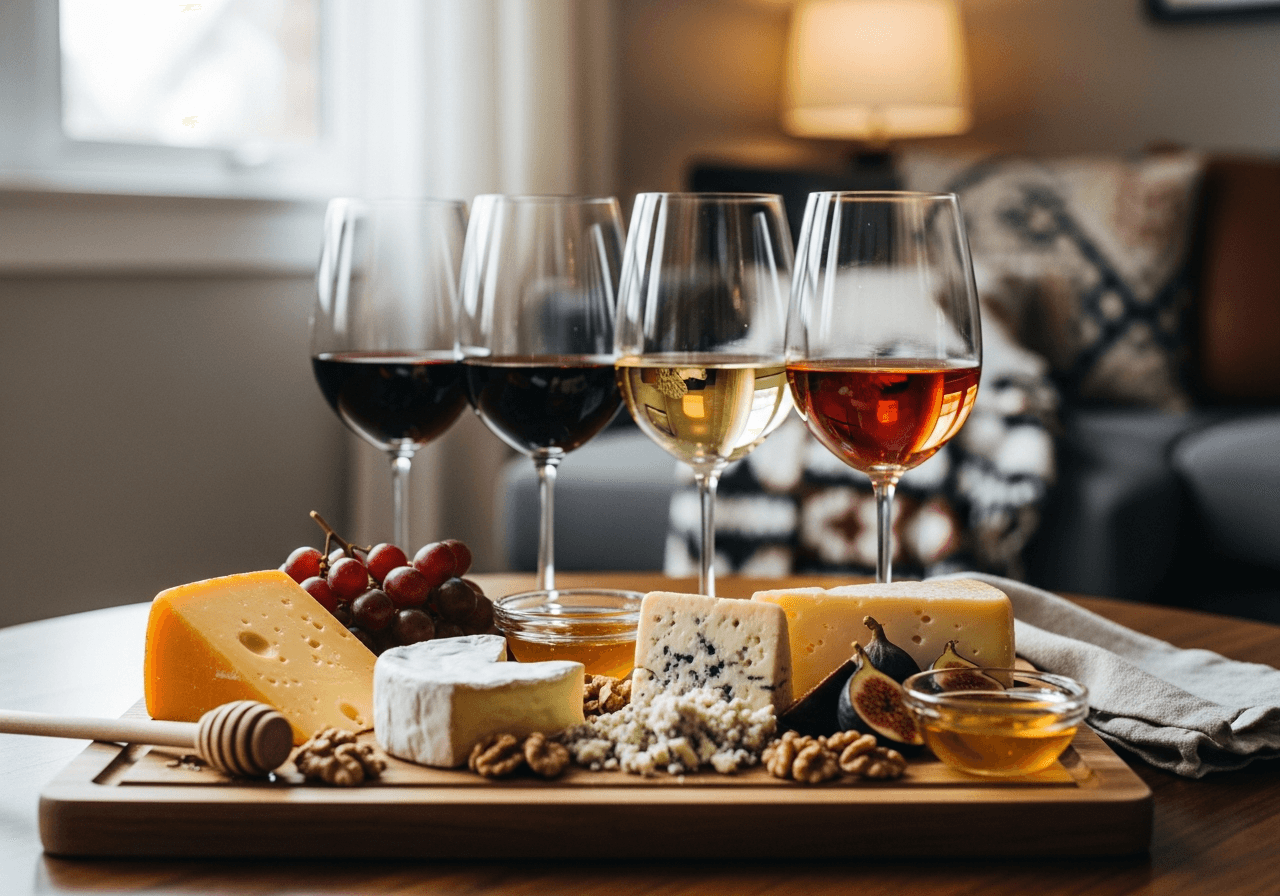
Susan put a wedge of Comte and a half-bottle of Cotes du Rhone on the kitchen counter the other evening, and I realized that after thirty-odd years of importing wine I still reach for the same handful of pairings. Not because I am out of ideas, but because the ones that work have been working since the producers in question were tending their grandfathers' vines. What follows is the short list I would set out for company tonight, with notes for anyone past sixty who, like me, has finally stopped pretending to enjoy wines that fight back.
Two ground rules before we get to the pairings. First, acidity loves acidity: a goat cheese wants a wine with some lift, not a hammer. Second, region is your friend. The producer in the Basque foothills and the shepherd a few valleys over have been eating and drinking the same things for centuries, and your tongue will thank you for honoring that. Beyond those two ideas, relax. A pleasant table and good conversation cover a multitude of pairing sins.
10. Brie and Champagne
The classic for a reason. A proper Brie, ripened to the point where the center is just beginning to slump, has enough fat to coat the palate, and Champagne's acidity and bubbles scrub it clean between bites. Buy the wedge a day ahead and let it sit out for an hour before serving. Skip the supermarket house-brand brie that tastes like cold butter; spend the extra few dollars on something cut from a wheel. If Champagne feels showy, a grower-producer Cremant from the Loire or Burgundy does the same job for half the money.
9. Ossau-Iraty and Jurancon Sec
I have been pouring Jurancon Sec with this Basque sheep's-milk cheese since a producer in Pau put one in front of me in the late eighties and I have not found a better match. The cheese is nutty, gently sweet, almost caramelized at the rind; the dry Jurancon brings citrus peel and a saline edge that wakes the whole pairing up. If your shop does not carry Jurancon, an Iroulguy red from just down the road works beautifully, or a stony Sancerre will do in a pinch. Black-cherry preserves on the side, the way they serve it in the Pyrenees.
8. Aged Comte and a White Burgundy
I am replacing the original Montrachet-and-Bordeaux suggestion because it never quite worked on my table. A 24-month Comte, with its hazelnut and toffee notes, is the cheese that finally taught me white Burgundy. A village-level Meursault or a good Saint-Aubin matches the cheese pound for pound. If the wine budget is tight, a Macon-Villages from a serious producer holds its own. For the truly aged Comte, the kind with the crystals, a small pour of Vin Jaune from the Jura is the regional answer, and worth knowing once before deciding whether it is for you.
7. Aged Monterey Jack and a North-Coast Cabernet
One of the few American pairings on my list, and a sentimental favorite from years of West Coast trips. A well-aged dry Jack, the kind wrapped in cocoa or pepper, has the nutty firmness to stand up to a Napa or Sonoma Cabernet without surrendering. Pick a bottle in the thirty- to forty-dollar range from a producer who has not chased the high-alcohol cult style. A handful of California almonds and a few dried figs round it out.
6. Blue Cheese and Late-Harvest Zinfandel (or Port)
Blue cheese is the one place I will tell you to go sweeter rather than drier. A salty, peppery Roquefort or a creamier Stilton wants something with residual sugar to meet it halfway. A late-harvest Zinfandel from a Dry Creek producer works well; a tawny Port is the older, steadier choice and keeps for weeks in the fridge once opened, which matters when there are only two of us at the table. A square of bittersweet chocolate alongside is not gilding the lily, it is finishing the thought.
5. Munster and Alsatian Gewurztraminer
Real Munster from Alsace is a noisy cheese, the kind that announces itself when you open the refrigerator. The wine from the same valley meets it on its own terms. Look for a Gewurztraminer that says "sec" or has only a hint of residual sweetness; the late-harvest versions are lovely on their own but get jammy against the cheese. A few slices of tart apple bridge the two. This is a winter pairing for me, the sort of thing Susan and I share by the woodstove.
4. Parmigiano-Reggiano and Brunello di Montalcino
A proper 24- or 30-month Parmigiano broken into shards, a glass of Brunello from a producer like Il Poggione or Argiano, and you are most of the way to dinner. The wine's tannin and acidity match the cheese's saltiness, and the savory length runs on for a full minute after the bite. If Brunello is out of reach, a Rosso di Montalcino from the same estate is the value play. Drizzle a few drops of aged balsamico over the cheese if you have the good bottle in the cupboard, not the supermarket version.
3. Cambozola and a Quiet Merlot
Cambozola, that German cross between Camembert and Gorgonzola, is the cheese I bring out when a guest tells me they do not like blue cheese. It is creamy enough to disarm them and just blue enough to expand the conversation. Pair it with a soft Merlot from Bordeaux's Right Bank or a serious California Merlot from the Carneros side of Napa. The recent return-to-form for Merlot has been one of the more welcome shifts in the trade.
2. Pecorino Toscano and Chianti Classico
I have moved away from the Pecorino-and-Amarone suggestion in the older version of this list. Amarone is a fine wine but it overruns most cheeses at this point in life. A medium-aged Pecorino Toscano, sliced thin, with a good Chianti Classico Riserva is a Tuscan farmer's lunch and the kind of pairing you can sit with for an hour. Add a few drops of chestnut honey on the cheese; it does something quietly remarkable to the wine.
1. Garrotxa and Ribera del Duero
Top of the list, and the one I would pour for a guest who wanted to try something a step off the usual path. Garrotxa is a Catalan goat's-milk cheese, firm and a little flinty, with a gray bloomy rind. A Ribera del Duero from a producer like Emilio Moro or Pesquera, five to eight years old, brings dark fruit and a tobacco-leaf finish that the cheese answers back to. Marcona almonds and a slice of quince paste alongside, and you have made yourselves a small Spanish supper.
A few practical notes for the rest of us
Buy cheese in smaller quantities than you used to. Two ounces per person, three if you are skipping a course, is plenty; what does not get eaten dries out in the fridge no matter how carefully you wrap it. Pull the cheese out an hour before serving, the wine half an hour. Use a real cheese knife, not a steak knife, and serve on a wooden board if you have one because cold marble shocks a soft cheese into stiffness.
And one last thing. If your shop has a counter person who actually cuts the cheese, ask them what came in this week. The good ones will tell you what is at peak and what was sitting too long, and they will save you from the wedge with the gray ammonia bloom near the rind. That conversation, more than any chart on the internet, is what will keep your table interesting in your seventies.