

Beef cuts
By Catalogs Editorial Staff
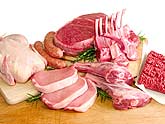
Useful information about beef cuts
A general knowledge of beef cuts and how they are best used will help you select the proper cut for a particular recipe. Important points to learn are: The most tender cuts come from the loin and the rib. They should be cooked with high heat methods such as broiling, roasting, grilling, saut?ing, and frying. Cuts from the round, chuck, brisket, plate, and flank are the least tender and are best suited for moist heat cooking methods such as braising/ pot-roasting, stewing, and steaming.Various beef cuts may differ in name between different countries and even in different regions of the same country, so it can be confusing. For example, in the United States, the rear section of the carcass is known as the round, but in Canada, the same section is called the hip.
Comprehending all the different beef cuts can be a little confusing. For example, a strip steak, New York strip, Kansas City steak, club steak, shell steak, and top loin steak all come from the same section of beef? Beef is muscle tissue. The first thing that must be understood is that frequently used muscles are tougher and generally require long, slow, moist heat cooking methods to loosen their connective tissue, while lesser used muscles are tender and need dry heat methods. Moist heat cooking methods for beef include braising, boiling and stewing. Dry heat methods include saut?ing, grilling, roasting, and broiling.
Before you continue reading about the Beef cuts there is a special announcement we would like to share with you. Catalogs.com has negotiated special medicare rates for our vibrant community of seniors. If you are over the age of 60, you can head over to our Seniors Health Section which is full of information about medicare. All you need is your zip code and a few minutes of your time to potentially save 100s of dollars on your medicare bills.
? The chuck, brisket, round and shank are the most exercised muscles and hence, the toughest. A pot roast can be made from chuck via braising, (cooking the meat in a small amount of liquid for an extended period of time). Chuck is also useful for stew meat, making stock, and ground beef. Your average hamburger is mostly ground chuck. ? The brisket is home to corned and barbequed beef. The infamous corned beef and cabbage is made from boiling the meat. Pot roast can also be done with brisket, again by braising. ? The round includes the top round, bottom round, heel round, eye round, and rump roast. Sometimes ground beef is made from the round as well. Although all round beef cuts are tough, the top round is the tenderest, relatively speaking. Because of this, it can be roasted. London broil comes from the top round and can also be grilled. All of the others however, do best made into roasts with moist heat methods. One exception is your deli roast beef. Because it is sliced thin, producers can get away with roasting, (dry heat), the bottom or eye round which are cheaper than the top round. Notice that making a “roast” does not necessarily mean that the meat will be roasted. At the risk of belaboring the point for clarification, roasts such as pot roasts from tough cuts, require braising. Roasts made from more tender meat are made by actually roasting. ? The shank is definitely best when braised as in the classic dish osso buco. It can also be used for stews and stocks. ~? The short plate and flank contain meat of medium toughness. The muscle fibers are relatively coarse but contain sufficient intramuscular fat to maintain tenderness. The short plate gives us short ribs which are braised or boiled as in New England boiled beef. Skirt steak, (from the short plate) and flank and hanger steaks, (from the flank), are delicious when grilled. However, they must not be overcooked, benefit from being marinated, and should be cut against the grain for a softer texture. Mexican fajitas are often made from marinated strips of flank steak. ? The rib, short loin, and sirloin render the most delicate cuts of beef. Broiling, grilling, saut?ing and roasting reign supreme here. Rib steaks, (also known as delmonico or prime rib), rib eye steaks, (without the bone), and rib roasts, naturally come from the rib. The sirloin provides a variety of sirloin steaks differing on where in the sirloin they are cut from. Sirloin can also be ground and mixed with ground chuck for primo hamburgers. ? Finally, the cr?me de la cr?me of beef: the short loin. Picture a porterhouse or T-bone steak. The larger side is referred to by all the names at the top of the article: top loin, strip, New York strip, shell steak, etc. The smaller side is the tenderloin or filet mignon. The porterhouse and the T-bone are the same except that the porterhouse is cut from the larger end of the short loin and thus provides more of the filet mignon. Both the top loin and the tenderloin can be cut into individual steaks, or larger roasts. In the case of the top loin, the steaks may or may not be attached to the bone. The tenderloin is always boneless except when part of a porterhouse or T-bone steak.
Government food labeling laws determine which beef cuts can be called “lean” or “extra lean” based on the fat and cholesterol content.Tips for decreasing the fat content of beef include: ?X Look for “USDA Choice” or “USDA Select” grades of beef rather than “USDA Prime,” which usually has more fat content. ?X When buying ground beef, look for packages with the lowest percentage of fat ? 15 percent or lower. Most stores offer several types of ground beef with varying percentages of fat by weight. ?X Avoid beef that has streaks of fat throughout (marbled). Instead, buy meat with the least amount of visible fat. ?X Trim off visible fat. Government food labeling laws determine which cuts of beef can be called “lean” or “extra lean” based on the fat and cholesterol content.• The short plate and flank contain meat of medium toughness. The muscle fibers are relatively coarse but contain sufficient intramuscular fat to maintain tenderness. The short plate gives us short ribs which are braised or boiled as in New England boiled beef. Skirt steak, (from the short plate) and flank and hanger steaks, (from the flank), are delicious when grilled. However, they must not be overcooked, benefit from being marinated, and should be cut against the grain for a softer texture. Mexican fajitas are often made from marinated strips of flank steak. • The rib, short loin, and sirloin render the most delicate cuts of beef. Broiling, grilling, sautéing and roasting reign supreme here. Rib steaks, (also known as delmonico or prime rib), rib eye steaks, (without the bone), and rib roasts, naturally come from the rib. The sirloin provides a variety of sirloin steaks differing on where in the sirloin they are cut from. Sirloin can also be ground and mixed with ground chuck for primo hamburgers. • Finally, the crème de la crème of beef: the short loin. Picture a porterhouse or T-bone steak. The larger side is referred to by all the names at the top of the article: top loin, strip, New York strip, shell steak, etc. The smaller side is the tenderloin or filet mignon. The porterhouse and the T-bone are the same except that the porterhouse is cut from the larger end of the short loin and thus provides more of the filet mignon. Both the top loin and the tenderloin can be cut into individual steaks, or larger roasts. In the case of the top loin, the steaks may or may not be attached to the bone. The tenderloin is always boneless except when part of a porterhouse or T-bone steak.
Government food labeling laws determine which beef cuts can be called “lean” or “extra lean” based on the fat and cholesterol content.Tips for decreasing the fat content of beef include: „X Look for “USDA Choice” or “USDA Select” grades of beef rather than “USDA Prime,” which usually has more fat content. „X When buying ground beef, look for packages with the lowest percentage of fat — 15 percent or lower. Most stores offer several types of ground beef with varying percentages of fat by weight. „X Avoid beef that has streaks of fat throughout (marbled). Instead, buy meat with the least amount of visible fat. „X Trim off visible fat. Government food labeling laws determine which cuts of beef can be called “lean” or “extra lean” based on the fat and cholesterol content.
Popular Savings Offers


10% OFF
Get 10% off when you sign up for texts and free shipping on your first order over $50

The Lighter Side
Free Catalog
Get FREE Catalog to browse Cabela's Camping products
.jpg)
Cabela's Camping

Free Catalog
Get your Free Catalog and shop the best selection and collection of Sturbridge Yankee Workshop Products on the Clearance Sale

Sturbridge Yankee Workshop


.jpg)
Free Catalog
Get your Free Catalog and shop the best selection and collection of Designer Drapery Hardware Products on the Clearance Sale

Designer Drapery Hardware











.png?w=3840 "Order Free Catalogs from Music In Motion")


.jpg?w=3840 "Order Free Catalogs from Shoeline.com")