We’ve listed here our take on the 10 most important people in history. How they got on that list depends on the influence they had on their contemporaries and the rest of the world and how they influenced our history. It’s not uncommon to find original and historic memorabilia documenting these famous people in museums around the world.
There is probably no question about who these people are; only their ranking may be a matter of dispute. Is Muhammad more important than Jesus Christ? That is a subject for debate, but that both influenced and continue to influence people today is undisputed. The same can be said for the other eight.
- 1. Muhammad Founder of the Islamic faith, but also a military and political leader. Mohammed revised the social, economic and political life of a large area of the Middle East and North Africa, eliminating practices like female infanticide, and creating new rights to property and autonomy for women. He received and transmitted the Koran, the holy book of Islam. Muslims view him not as the creator of a new religion, but as the restorer of the original, uncorrupted monotheistic faith of Adam, Abraham, and others. He was influential in setting up the just society that would be moral in the eyes of Allah (Arabic for the God).
- 2. Isaac Newton Scientist who summarized all of the findings of all great scientists before him, such as Galileo, Copernicus, Kepler, and Tyco Brahe. The author of the revolutionary work, Principia, he is also credited with developing differential calculus. In addition, he wrote about optics and gravitation. Newton’s “clockwork” metaphor of the universe influenced science for over 200 years. As the Master of the Mint (Secretary of Treasury) in England, he set in motion how capitalism was to operate at the national level.
- 3. Jesus Christ Founder of Christianity, a worldwide religion that has influenced the world for over 2000 years. His philosophy of love and acceptance was radically new in a world that frequently feared God. Jesus made God approachable. “Love thy neighbor as yourself” was a moral philosophy that preached equal acceptance for all. Jesus is credited with addressing the hypocrisy that existed within the early Common Era Jewish leadership, where attention to the rule of law had often superceded intention.
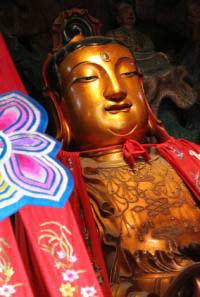
- 4. Buddha Founder of Buddhism, an Eastern religion that focused on man’s relationship with the self. He was born to a life of privilege and protection, but soon discovered that life also included suffering. He left his easy life, and tried to understand the nature of suffering and happiness. Through years of trial, he discovered that present-minded contemplation and sincere meditation were the keys to enlightenment. Buddha spent the reminder of his days sharing his discovery with followers and foes alike.
- 5. Confucius Founder of the religion or philosophy by the same name, he sought to bring order and reason to human society. Through his writings and example, he created a set of social conventions whereby the society and the people worked in harmony to give order and meaning to the world.
~
6. St. Paul Persecutor of Christians who nevertheless was converted “on the road to Damascus” and became an ardent Christian and the most influential Christians after Jesus. St. Paul wrote many Epistles in the New Testament and set forth what it was to be a Christian. His writings are still cited today as an authority for Christian behavior and belief.
7. Ts’ai Lun Inventor of paper. Civilization as we know it would not exist without the ability to write down what has occurred, to have a record for all to view and acknowledge. First manufactured sometime between 100 and 150 AD, paper slowly spread among nations.
8. Johann Gutenberg Inventor of the printing press. Gutenberg took Ts’ai Lun’s invention to the next level. His invention of the press made literacy and education possible for everyone because they could access writings that had once been too expensive or too rare for the common man or woman. The first printed book published was the King James Bible.
9. Christopher Columbus Explorer who set in motion a series of events that would change the world forever. He made the North and South American continents available for exploration. Although some have argued that the Vikings actually arrived in the New World 400 years earlier, it was Columbus who provided the information for further exploration and settlement. As is the case with many influential people, his actions were not entirely benign – Columbus is also responsible for the spread of deadly infections to the indigenous people of the Americas, and marked the beginning of the end for many tribal groups who would fall to the invading European nations.
10. Albert Einstein Developer of the theories of special and general relativity, which changed the way scientists see our world. In 1950 he published five landmark scientific papers, any one of which would have been considered an astounding work of original science. Together, they represented a whole new view of the universe, physics and mathematics. He also had a hand in creating the science of quantum mechanics.
Who are the 10 most important people in history? We have seen the list of the 10 most important people in history, and many are religious figures. Four of the ten were there because of their impact on science and technology.
Together, they continue to influence the lives and behavior of people all over the world.
6. St. Paul Persecutor of Christians who nevertheless was converted “on the road to Damascus” and became an ardent Christian and the most influential Christians after Jesus. St. Paul wrote many Epistles in the New Testament and set forth what it was to be a Christian. His writings are still cited today as an authority for Christian behavior and belief.
7. Ts’ai Lun Inventor of paper. Civilization as we know it would not exist without the ability to write down what has occurred, to have a record for all to view and acknowledge. First manufactured sometime between 100 and 150 AD, paper slowly spread among nations.
8. Johann Gutenberg Inventor of the printing press. Gutenberg took Ts’ai Lun’s invention to the next level. His invention of the press made literacy and education possible for everyone because they could access writings that had once been too expensive or too rare for the common man or woman. The first printed book published was the King James Bible.
9. Christopher Columbus Explorer who set in motion a series of events that would change the world forever. He made the North and South American continents available for exploration. Although some have argued that the Vikings actually arrived in the New World 400 years earlier, it was Columbus who provided the information for further exploration and settlement. As is the case with many influential people, his actions were not entirely benign – Columbus is also responsible for the spread of deadly infections to the indigenous people of the Americas, and marked the beginning of the end for many tribal groups who would fall to the invading European nations.
10. Albert Einstein Developer of the theories of special and general relativity, which changed the way scientists see our world. In 1950 he published five landmark scientific papers, any one of which would have been considered an astounding work of original science. Together, they represented a whole new view of the universe, physics and mathematics. He also had a hand in creating the science of quantum mechanics.
Who are the 10 most important people in history? We have seen the list of the 10 most important people in history, and many are religious figures. Four of the ten were there because of their impact on science and technology.
Together, they continue to influence the lives and behavior of people all over the world.


