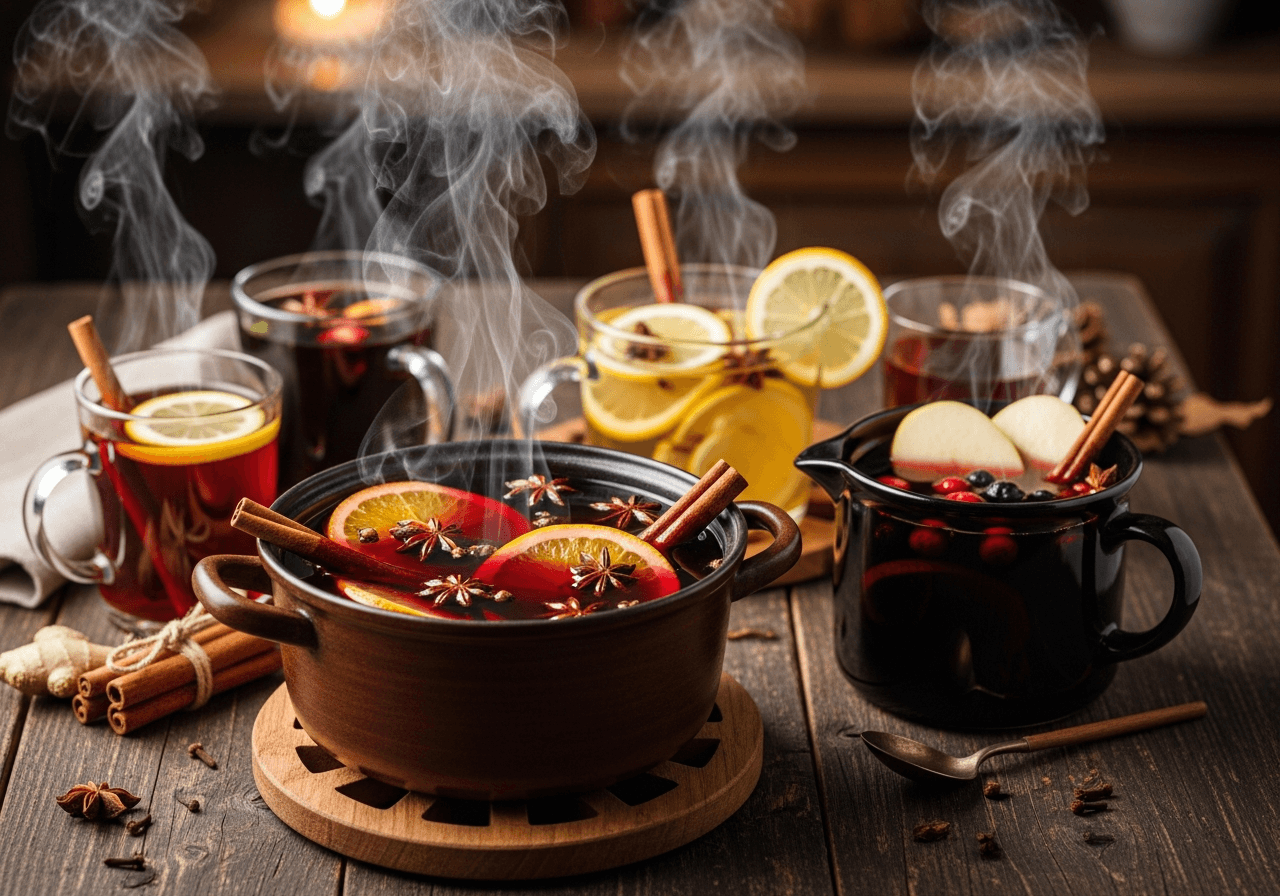
The first time I had a proper glass of hot spiced wine was in a tin mug in a market square outside Tubingen, in 1984, standing in a slow drizzle with a producer I'd come to see about a small parcel of Trollinger. He poured it from a copper kettle that had clearly been on duty all afternoon. It was sweet, peppery, smelled like Christmas, and warmed me from the breastbone out. I have been making versions of it every winter since, and the barn here in Sonoma gets a pot going from the first cold snap in November through the rain in February.
Hot spiced wine is one of the oldest preparations in the European book. Romans were warming wine with honey and pepper. The Germans call it Gluhwein, the Scandinavians glogg, the French vin chaud, the Brits mulled wine. The recipes drift from country to country but the bones are the same: a sound red, citrus, sugar in some form, and a handful of warming spices that simmer just long enough to perfume the pour without burning off what you paid for.
Here is what I have learned over forty years of doing it, plus six recipes worth keeping in your file.
What kind of wine to use
Do not, please, reach for the cheapest bottle on the bottom shelf. You also do not need to open the Burgundy you have been saving for an anniversary. The sweet spot is a dry red in the ten-to-fifteen-dollar range with some fruit in the middle and not too much oak. Cotes du Rhone is honest here. A young Spanish Garnacha is excellent. An everyday Chianti will do beautifully. A California Zinfandel from a producer like Bogle or Ravenswood adds a generous, jammy backbone that holds up to spice. Avoid anything heavily oaked or anything tannic and tight; the heat will exaggerate the rough edges.
If you want a white version, a dry Riesling or a Gruner Veltliner works. White Gluhwein has had a moment at the German Christmas markets the last few seasons and it is a lovely change of pace if you are tired of red.
The temperature rule
The single most common mistake I see is boiling. Do not boil spiced wine. You will cook off the alcohol you wanted and pull bitter compounds out of the spices and the citrus pith. Keep the pot at a bare simmer, around 160 to 175 degrees if you have a thermometer. If you see active bubbles breaking the surface, take it off the heat. Twenty to thirty minutes is plenty to infuse the spices. Longer is not better.
Alpine-Style Mulled Red
This is the version I make most often, adapted from a producer's wife in the South Tyrol who served it from a stockpot during a 1991 visit.
- 1 bottle dry red (Cotes du Rhone, Chianti, or a young Zinfandel)
- 3 tablespoons honey
- 2 cinnamon sticks
- 1 teaspoon green cardamom pods, lightly crushed
- 1 teaspoon black peppercorns
- Peel of one orange (no pith)
- Peel of one lemon (no pith)
- Optional: 2 tablespoons sugar if your wine is austere
Combine in a saucepan. Bring to a bare simmer over low heat. Hold there for 20 minutes, stirring once or twice. Strain into mugs.
Classic Gluhwein
The version you would actually get in Nuremberg or Munich. Simple, restrained, what most of the German market stands are pouring.
- 1 bottle dry red
- 1 cinnamon stick
- 6 whole cloves
- 2 star anise pods
- Peel of half a lemon
- 2 to 4 tablespoons sugar to taste
- Optional: a small shot of brandy or rum stirred in just before serving (the Germans call this mit Schuss, with a shot)
Warm everything together for half an hour over the lowest heat. Do not boil. Strain. Serve in a thick-walled mug.
Extra-Spicy Citrus Pot
For when the wind is howling.
- 4 cups dry red wine
- 4 ounces brandy
- 2 tablespoons brown sugar
- 1 tablespoon fresh lemon juice
- 1 cup fresh orange juice
- 4 whole cloves
- 8 whole peppercorns
- 3 cinnamon sticks
- A thumb of fresh ginger, sliced
Combine the brandy, sugar, juices, and spices in a four-quart pot. Bring to a low simmer for ten minutes to let the spices open up. Add the wine. Hold at a simmer for fifteen minutes more. Do not boil. Strain through a fine sieve.
Slow Cooker Crowd Pot
For a holiday party. A slow cooker on the warm setting will hold a pot of spiced wine at the right temperature for hours, which is the genuine trick to serving a group without standing over the stove.
- 2 bottles dry red
- 2 apples, peeled, cored, and sliced
- 3 whole cloves
- 2 cinnamon sticks
- 2 star anise pods
- 1/2 cup sugar (less if your wine is round)
- 1 teaspoon lemon juice
- Peel of one orange
Combine in the slow cooker. Cook on low for one hour to infuse, then switch to the warm setting. Do not use the high setting; you will boil off the alcohol and bring out a bitter edge. Set out a ladle and a small basket of mugs next to the pot.
Non-Alcoholic Mulled "Wine"
I have a daughter who stopped drinking a few years ago and several grandkids old enough to want a cup of something warm when the adults have theirs. The zero-proof category has grown up a great deal recently, and a credible alcohol-removed red is now easy to find at decent grocery stores. Failing that, this fruit-juice version is honest and warming.
- 3 cups pomegranate juice
- 1 cup unsweetened cranberry juice
- 1 cup tart cherry juice or unfiltered apple juice
- Peel of one orange
- 1 cinnamon stick
- 4 whole cloves
- 1 star anise pod
- 2 tablespoons honey or maple syrup
Same method: low and slow, twenty to thirty minutes, no boiling. The pomegranate and cranberry together give you the tannic edge that wine would. Even Susan, who is firmly on Team Red Wine, asked for a second mug of this at Thanksgiving last year.
Made-in-the-Bottle Spiced Red
A small-batch trick for two people. You pour out half the bottle (save it for a sauce, or for a cook's pour), funnel in the sugar and spices, recap, shake, and warm in a saucepan. It gives you a strong infusion without much fuss and only one mug to wash twice.
- 1 bottle dry red, half decanted off
- 1/3 cup sugar
- 5 crushed cloves
- 5 crushed black peppercorns
- 1 cinnamon stick
- A few slices of fresh ginger
Funnel everything in. Recap, swirl, let it sit ten minutes. Pour into a saucepan, warm at low heat for fifteen minutes. Strain and serve.
A few practical notes for the over-60 cook
Use the orange and lemon peel, not whole slices with the white pith. Pith is what turns a pot bitter after thirty minutes of simmering. A vegetable peeler does this in about twenty seconds, no knife skills required.
Buy whole spices, not ground. Ground cinnamon will turn your pot into a dusty mud. Whole sticks and pods are easy to strain out and they last in the cabinet for a year if you keep them sealed.
A thick-walled ceramic mug holds heat far better than a glass one, which also tends to crack on you. If you have an old Christmas market souvenir mug from a trip somewhere, this is its moment.
Mulled wine is forgiving and the kitchen will smell wonderful for two days. Pour a little for yourself before the guests arrive. That, in my experience, is part of the recipe.