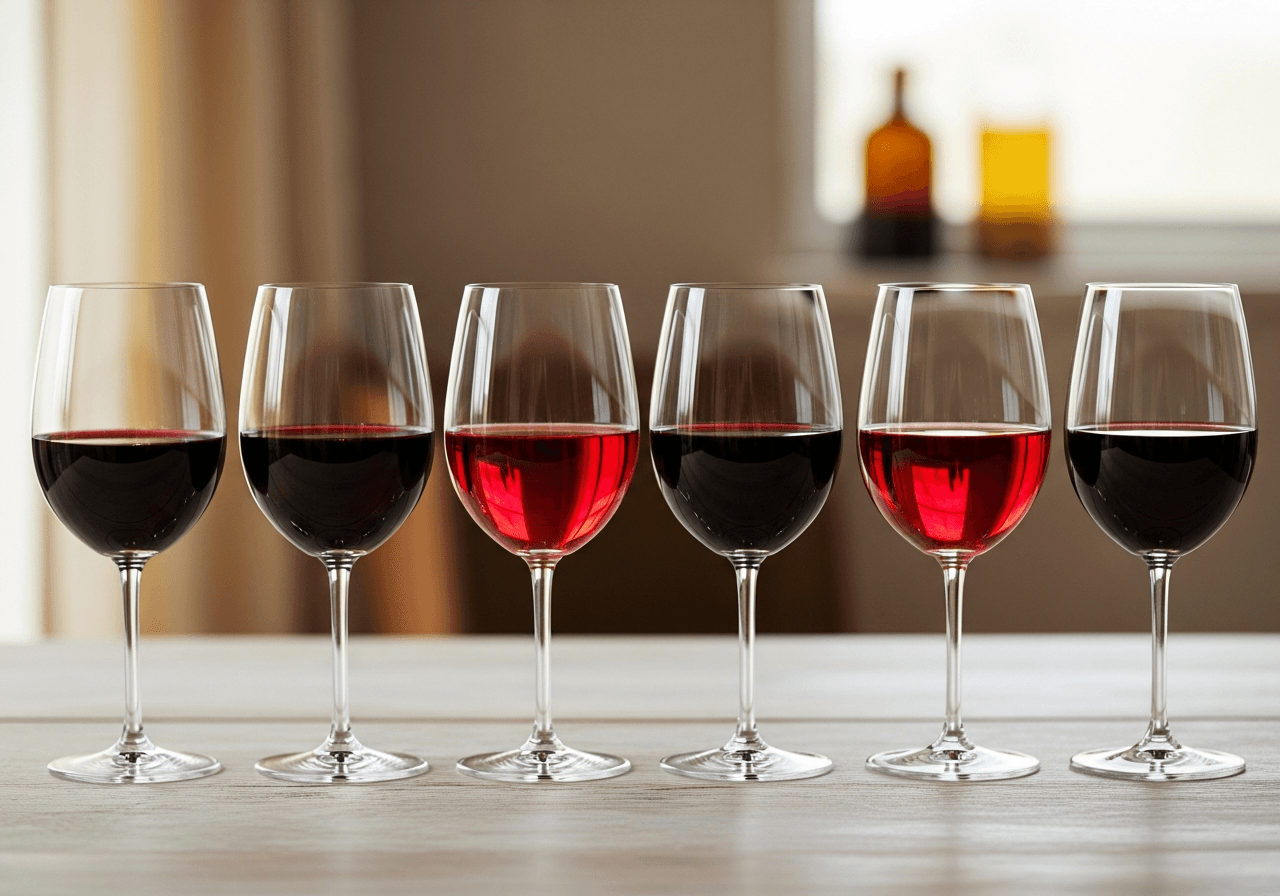
The first frost rolled into Sonoma last week, and I spent the morning carrying half a case of Cotes du Rhone up from the cellar under the barn. Susan asked me what I was up to, and I told her I was sorting out which reds to drink through the winter and which to set aside another year or two. That little exercise is what most people are really asking about when they ask me to explain the types of red wine. Not a textbook. Just a working knowledge of what is in the bottle and what to do with it.
So let me walk you through the reds you are most likely to meet at a decent shop, in the order I would introduce them to a friend who wanted to drink better without making a hobby of it. I have spent more than thirty years importing wine from small producers in France and Italy, and I will tell you up front that price is a poor proxy for pleasure. A fourteen-dollar bottle from the right village will outshine a ninety-dollar bottle from the wrong one nine times out of ten.
How red wine actually differs
Before the grape names, three traits do most of the explaining: body, tannin, and acidity. Body is how the wine feels in the mouth, the way skim milk feels different from whole. Tannin is that drying grip on your gums, the thing that lets a red stand up to a steak. Acidity is the brightness that keeps a wine from feeling heavy with food. Light reds are low in tannin and high in acid. Big reds are the opposite. Once you can taste those three things, the grape names start to make sense.
One thing worth knowing in 2026: a lot of the conversation around red wine has shifted toward lighter, fresher styles, and the producers I respect are leaning into that. The big oaky, high-alcohol reds that ruled the 1990s have given ground to wines you can drink with dinner without needing a nap afterward. That is good news for an older palate.
The reds worth knowing by name
Cabernet Sauvignon
The grape of the Medoc on the left bank of Bordeaux, and of Napa Valley. Deep color, firm tannins, flavors that lean toward black currant, cedar, and graphite. Cabernet rewards food, especially anything off the grill. The Bordeaux 2024 vintage was uneven for Merlot but kinder to Cabernet, so left-bank wines from that year are worth a look when they reach shelves. In California, a good Cabernet from a producer who has not chased high alcohol numbers will age well for a decade or more. Look for wines from Howell Mountain, Spring Mountain, or the cooler corners of the Napa floor.
Merlot
Often misunderstood. A movie made fun of it twenty years ago and a generation of drinkers passed it over. That is their loss. Merlot makes the great wines of Pomerol and Saint-Emilion on the right bank of Bordeaux. It is softer than Cabernet, with cherry and plum and sometimes chocolate at the edges. A good Merlot is the wine I pour for friends who think they do not like red wine. It also blends beautifully with Cabernet, which is what most California reds labeled as one or the other actually are.
Pinot Noir
The most demanding grape and the most rewarding. Burgundy is its homeland, and Burgundy will break your heart and your wallet, in that order. The good news is that Oregon, particularly the Willamette Valley, has been making world-class Pinot for thirty years now, and the 2024 vintage there was a quietly stunning growing season, the kind people will be talking about for years. Pinot at its best is translucent, perfumed, full of black cherry and earth and sometimes a whiff of mushroom or violet. Serve it slightly cool, around 60 degrees, and pair it with salmon, roast chicken, or a piece of duck.
Syrah, or Shiraz
Same grape, two names. Syrah in France and most of the United States, Shiraz in Australia. In the northern Rhone, where it makes Hermitage and Cote-Rotie, it is dense, peppery, smoky, and built to last decades. Australian Shiraz tends to be riper, jammier, friendlier on a Tuesday night. Both work with lamb, sausages, anything rubbed in black pepper.
Chianti and Sangiovese
Sangiovese is the grape, Chianti is the region in Tuscany. A bottle marked Chianti Classico must come from the historic heart of the zone and must be at least 80 percent Sangiovese. Chianti is bright, savory, full of cherry and tomato leaf and a touch of dried herbs. It is the wine I reach for with red sauce, with a piece of grilled steak Florentine style, with anything from a Tuscan cookbook. Look for the Gallo Nero, the black rooster, on the neck of the bottle.
Barbera and Nebbiolo
Two grapes from Piedmont in northwest Italy, often grown on the same hillsides but very different in the glass. Barbera is everyday wine, bright with acid, low in tannin, easy with weeknight pasta. I visited a producer outside Asti in 1987 and I have never stopped drinking his wine. Nebbiolo is the more serious cousin. It makes Barolo and Barbaresco, wines that are pale in color but powerful in flavor, with notes of tar, rose, and dried cherry. Barolo needs time, ten years at minimum for a good one, and food with some fat to it.
Tempranillo
The signature grape of Spain. Rioja is the most famous home, but Ribera del Duero often makes the more powerful wines. A Rioja Reserva, aged three years before release, is one of the best values in all of red wine. Flavors run to leather, tobacco, dried strawberry, and a smoothness that comes from time in American oak barrels.
Zinfandel
An American story. The grape arrived from Croatia in the 19th century and made itself at home in California, particularly in old-vine plantings in Sonoma and Lodi. Good Zinfandel is bold, peppery, full of bramble fruit, sometimes pushing 15 percent alcohol. Pair it with barbecue. Do not confuse it with white Zinfandel, which is a different drink entirely.
Lighter reds, and why a glass might still suit a warm afternoon
If your idea of red wine is something heavy and warming, give a few of these a try. Gamay from Beaujolais, especially from the named villages like Morgon or Fleurie. Frappato from Sicily. Schiava from the Alto Adige. Even a good Pinot Noir from a cooler vintage. These wines like to be served around 55 to 60 degrees, which means a 20-minute spell in the refrigerator before pouring. They are pleasant in summer, friendly with charcuterie or a simple roast chicken, and they will not put you to sleep before the news comes on.
A practical takeaway
Build a small house list. Three or four wines you trust, from three or four producers you know by name. A Cotes du Rhone or Beaujolais Villages for the weeknight, a Chianti Classico for pasta, a Rioja Reserva or a good Oregon Pinot for the weekend, and a Cabernet or a Barolo for the occasions that warrant it. Buy by the case when you find a producer you like, because the per-bottle price drops and you stop fussing over what to open. And ignore the noise about scores. The best wine you will drink this year is the one that fits the meal in front of you.