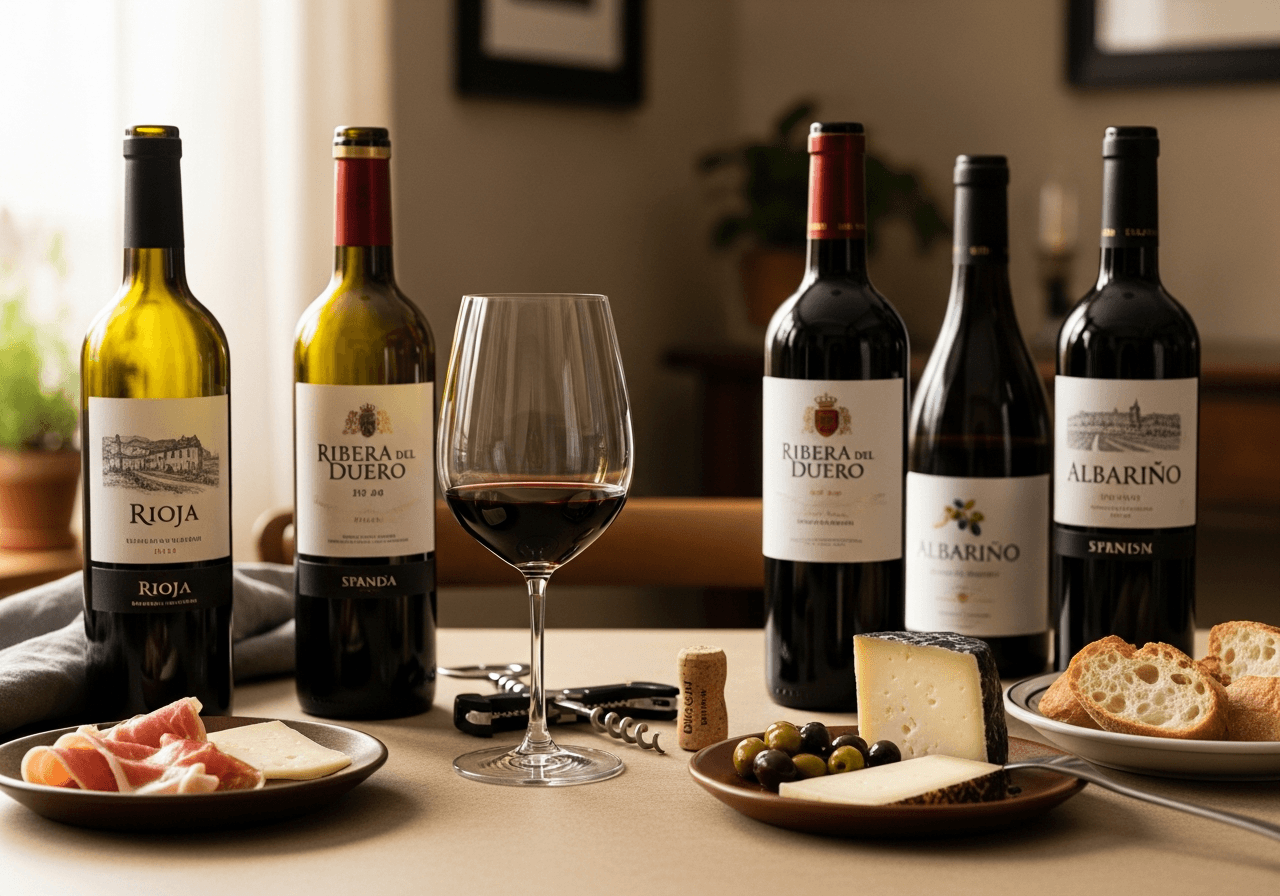
The first time I drank a proper bottle of Rioja was in 1984, in a producer's kitchen north of Logroño, with bread the size of a hubcap and a hunk of Manchego that had been sitting out since lunch. The wine was a Reserva, and it was the year I stopped thinking of Spain as a place that sat in the shadow of France. Forty-some years later, I still keep a few bottles from Rioja and Ribera del Duero in the rack by the back door, and I still tell people the same thing I told my American buyers in the eighties: Spain pours more honest wine for the money than anywhere else in Europe.
What follows is what I'd tell a neighbor over the kitchen counter, not what you'll find on a sommelier's flashcard. If you're in your sixties and seventies and you've decided it's about time you understood Spanish wine, the door is wide open. The country has finally gotten over its insecurity about Bordeaux, and the wines coming out of it now are some of the most interesting on the table.
Read the label, ignore the noise
Spanish wine labels look intimidating, but most of what you need to know fits on the back of a napkin. The classifications run from Vino de España (a basic table wine) up through Vino de la Tierra (a regional wine, looser rules), to Denominación de Origen (DO), and at the top, Denominación de Origen Calificada (DOCa). Only two regions have ever earned DOCa status: Rioja and Priorat. There's also Vino de Pago, which is a single-estate designation for a vineyard that has earned the right to stand on its own name. Roughly two dozen estates hold it.
Then come the aging tiers, which are what trip most people up. Under current rules, here is what these words actually mean for a red wine:
- Joven: A young wine, little to no oak. Drink it now, with whatever's on the stove.
- Roble: Brief time in oak. A producer's way of giving you some structure without the commitment of a Crianza.
- Crianza: Two years of total aging, with at least one of those years in oak. The everyday workhorse of Rioja.
- Reserva: Three years total, at least one in oak. A pour for Sunday dinner, not Wednesday pasta.
- Gran Reserva: Five years total, with at least eighteen months in oak. Made only in years the producer thought were worth the trouble.
For whites and rosés the timing is shorter, but the same hierarchy holds. The point isn't to memorize this. The point is that the label is doing a lot of work for you, if you let it. A Crianza from a good producer at fourteen dollars is, almost always, a better Tuesday wine than a forty-dollar Napa cab from a label you don't recognize.
The regions worth knowing
Spain has sixty-nine DOs at last count, and you don't need to know most of them. Five will carry you a long way.
Rioja
The flagship. Tempranillo is the grape, usually blended with a little Garnacha or Mazuelo. A young Rioja is bright and cherry-driven; a Reserva softens into leather, tobacco, and dried herbs; a Gran Reserva, if you find one made by a producer who still believes in long aging — López de Heredia, Muga, La Rioja Alta — can sit on your table at seventy years old and still have something to say. The 2021 vintage is being talked about the way people talked about 2001 and 2010. Worth laying a few bottles down, if you've got the patience.
Ribera del Duero
Higher altitude, colder nights, the same grape (called Tinto Fino here) producing a darker, more structured wine. For years Ribera leaned on heavy oak and ripe fruit; the younger producers are pulling back, working older vineyards, using less new wood. The wines are getting more interesting. If you've only had one Ribera, try another.
Priorat
The other DOCa. Old Garnacha and Cariñena vines grown on slate hillsides in Catalonia. The wines are concentrated, sometimes pricey, occasionally over-extracted in the wrong hands. When they're right, they're remarkable. Not an everyday pour.
Rías Baixas
Galicia, on the Atlantic coast. The grape is Albariño, and there isn't a better white in Spain for shellfish, grilled fish, or a hot August afternoon on the porch. Look for bottles from a single producer rather than a co-op blend.
Jerez
Sherry, in other words. A category most Americans gave up on in the seventies because their parents drank cream sherry out of a decanter in the den. That's a shame. A chilled glass of Fino or Manzanilla with olives and almonds before dinner is one of the great pleasures in wine, and a half-bottle costs less than a movie ticket.
What to pour with what you're cooking
The old rule of thumb — Spanish wine with Spanish food — works, but it isn't the only one. A Crianza Rioja handles roast chicken, pork loin, lamb chops, and most weeknight stews without complaint. A Ribera leans toward heavier red meat and aged cheese. Albariño wants seafood, full stop: oysters, scallops, a piece of broiled cod. Cava, the sparkling wine from Catalonia, is a perfectly serious aperitif and pairs with almost anything fried. Sherry, the dry styles, is for olives, jamón, and the first thirty minutes of a long evening.
One small note on sweet wines: dulce on a Spanish label means sweet, seco means dry, and a paella does not, as you may have read somewhere, require a sweet wine. A bone-dry Albariño or a young Garnacha rosé will serve you much better.
Buying without getting fleeced
Three quiet pieces of advice from someone who spent thirty years importing this stuff.
- The fourteen-dollar Crianza is the bargain of the wine aisle. Producers like Marqués de Cáceres, CVNE's Cune line, Bodegas LAN, and Faustino put out honest Crianzas at that price. They drink better than a lot of wines at three times the cost.
- Avoid the label that's trying too hard. If a bottle is wrapped in gold foil and the back label is a paragraph of marketing prose, somebody is paying for the foil. Spanish producers who care about wine tend to put their effort into the bottle, not the packaging.
- Find one shop you trust. A good wine merchant — not the big-box chain — will steer you toward the producer's whose bottles are arriving in good shape this month. Walk in, tell them what you ate last Tuesday, and ask what they'd pour with it. That's how you learn.
A practical takeaway, if you'll have one: this week, buy a Crianza Rioja and an Albariño from Rías Baixas. Drink the white with whatever fish your market has, the red with a roast chicken on Sunday. Don't look anything up, don't take notes. Just notice what you taste. That's how you stop being intimidated by Spanish wine — by drinking it, on a Tuesday, with the people you eat with anyway.