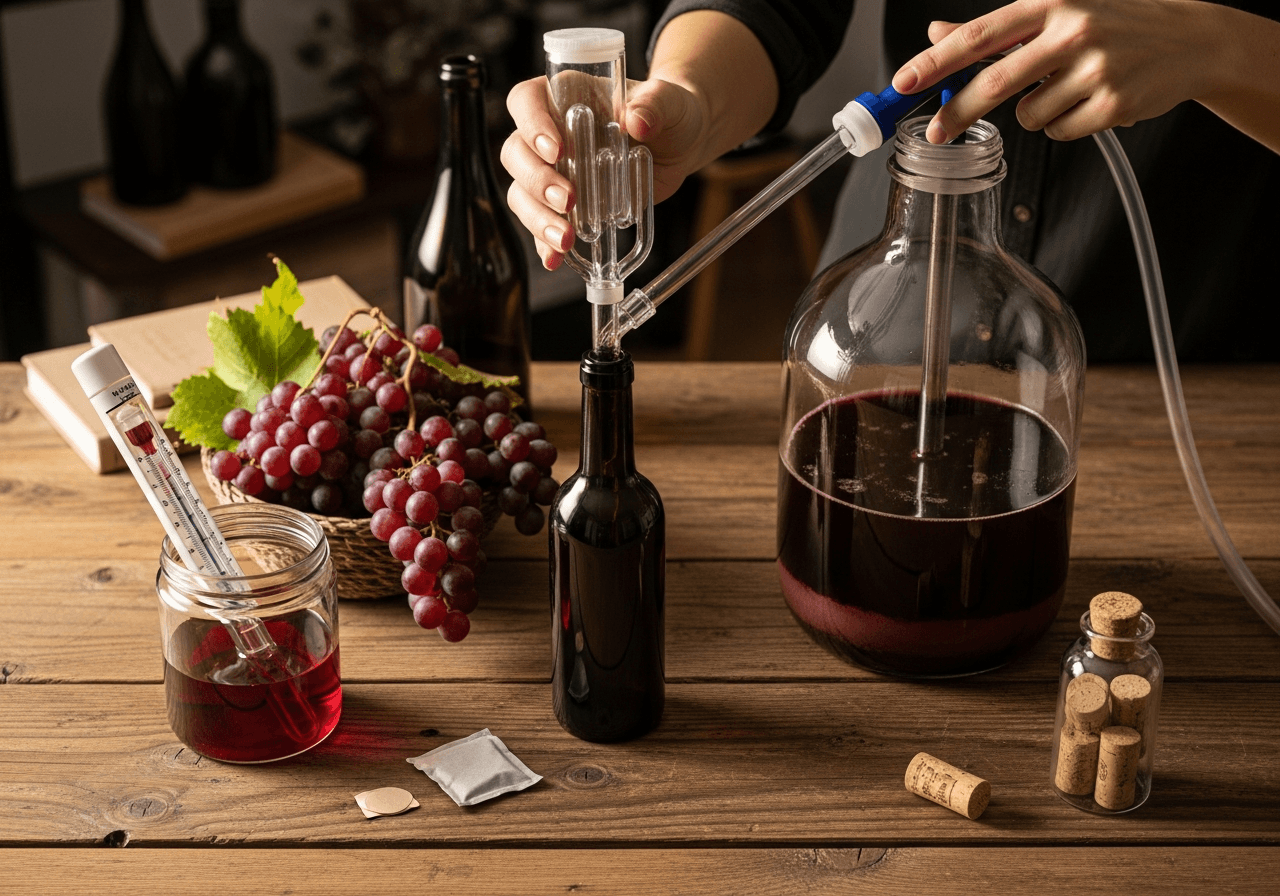
The first wine I ever made was in 1979, in the garage of a rented bungalow in Westchester, with a five-gallon glass carboy a producer in the Veneto had sent me as a gift. It was a Sangiovese blend, and it was, I will admit, mediocre. But it taught me more about wine in three months than two years of tasting flights had. If you are 60 or 65 or 75 and have always wondered what it would be like to fill a bottle with something you made yourself, the answer is: it is one of the more honest pleasures left to us. Susan and I still keep a couple of carboys going out in the barn, mostly Zinfandel from a neighbor's vineyard up the road.
What you can legally make, and how much
Federal law is generous. Under 27 CFR 24.75, an adult household with two or more adults can produce up to 200 gallons of wine per calendar year for personal use, tax-free. A single-adult household is capped at 100 gallons. That is roughly 1,000 standard bottles for a couple, which is more wine than any sensible person needs. You cannot sell it, you cannot trade it for cash, but you can pour it for friends, enter it in a contest, or give a bottle to your daughter's wedding caterer.
One caveat: state and local law can be stricter than federal. Check your state before you order grapes by the lug.
Kit, or fruit?
I tell every beginner the same thing: start with a kit. There is no shame in it, and the modern kits are honestly very good. A six-gallon kit from a reputable house — Winexpert, RJ Spagnols, Vineco — gives you balanced, sterile juice concentrate, the right yeast, fining agents, and a recipe sheet. You will have drinkable wine in four to six weeks and bottled wine in eight to twelve. After two or three kit batches you will know whether this is a hobby that suits you.
If it does, then you can graduate to fresh fruit — frozen must, juice buckets in the fall harvest, or your own grapes if you are fortunate enough to have a row of vines. The jump from kit to fresh fruit is large. It is the difference between cooking from a meal kit and shopping at the farmers' market.
The equipment you actually need
A starter kit will include most of this, but for the curious, here is the short list:
- A primary fermenter — typically a food-grade plastic bucket, 6 to 7.5 gallons, with a lid that accepts an airlock.
- A secondary fermenter — a glass or PET carboy, 5 or 6 gallons.
- An airlock and a drilled stopper.
- A racking cane and 5/16-inch siphon tubing.
- A hydrometer. This is the one tool people skip and regret. It tells you how much sugar is in your must, and later, when fermentation is complete.
- A wine thief or turkey baster for pulling samples.
- Sanitizer. Star San is the standard. Sanitation is 80 percent of clean wine.
- Bottles, corks, and a corker. A floor corker is worth the money if you stay with it.
Total starter outlay, if you buy thoughtfully, is around three hundred dollars. You will reuse most of it for years.
The process, in plain language
1. Prepare the must
If you are working from a kit, you sanitize, then pour the concentrate and water into the primary fermenter and stir. If you are working from fresh grapes, you destem (the stems carry harsh tannin and a green note nobody wants), crush, and let the juice and skins sit together. For a red, the skins stay in for the primary fermentation — that is where color and structure come from. For a white, you press first and ferment only the juice.
2. Pitch the yeast
Rehydrate the yeast per the packet instructions and sprinkle it onto the must. Within 24 to 48 hours you will see foam and hear a soft hiss from the airlock. That is the yeast eating sugar and exhaling carbon dioxide. Keep the temperature steady — 65 to 75 degrees for most reds, a few degrees cooler for whites. A basement or pantry usually works.
3. Primary fermentation
This runs 5 to 10 days for most kits and a bit longer for fresh fruit. The hydrometer reading drops as sugar converts to alcohol. When it reaches around 1.010 on a red, you press and transfer to the secondary fermenter.
4. Secondary fermentation and aging
The wine sits under airlock in the carboy for several weeks while it finishes fermenting and clarifies. You will rack — siphon it off its sediment — once or twice during this phase. Patience here matters more than fussing. Leave it alone.
5. Stabilize, fine, and bottle
When the hydrometer reads stable for three consecutive days at or near 0.995, fermentation is done. You add potassium sorbate and potassium metabisulfite to stabilize. You may fine with bentonite or another clarifier. Then bottle.
Resist the urge to drink it immediately. Most kit wines benefit from three months in the bottle. Reds from fresh fruit want a year or more. The Sangiovese I made in 1979 was at its best, frankly, in 1982.
A note on the new fashions
Pet-nat — pétillant naturel, bottled before primary fermentation finishes so the wine carbonates itself — has become quite popular with home winemakers, and I understand the appeal. It is fast and forgiving. I would gently suggest you wait until your second or third batch before trying it; bottles can explode if you misjudge residual sugar, and there is no fun in mopping wine off a basement ceiling. Orange wine — extended-skin-contact white — is another adventure for later. It is not new, by the way. Friulian producers have been making it for centuries.
A practical closing thought
Home winemaking rewards patience over technique. Buy a hydrometer. Sanitize everything twice. Write down what you did, because in six months when the wine surprises you, good or bad, you will want to know what you did differently. And pour a glass of someone else's wine while you wait — a producer you trust, a bottle you know — to keep your palate honest.
A bottle you made yourself, drunk at your own table with people you love, is one of life's small, durable goods. Worth the months it takes.