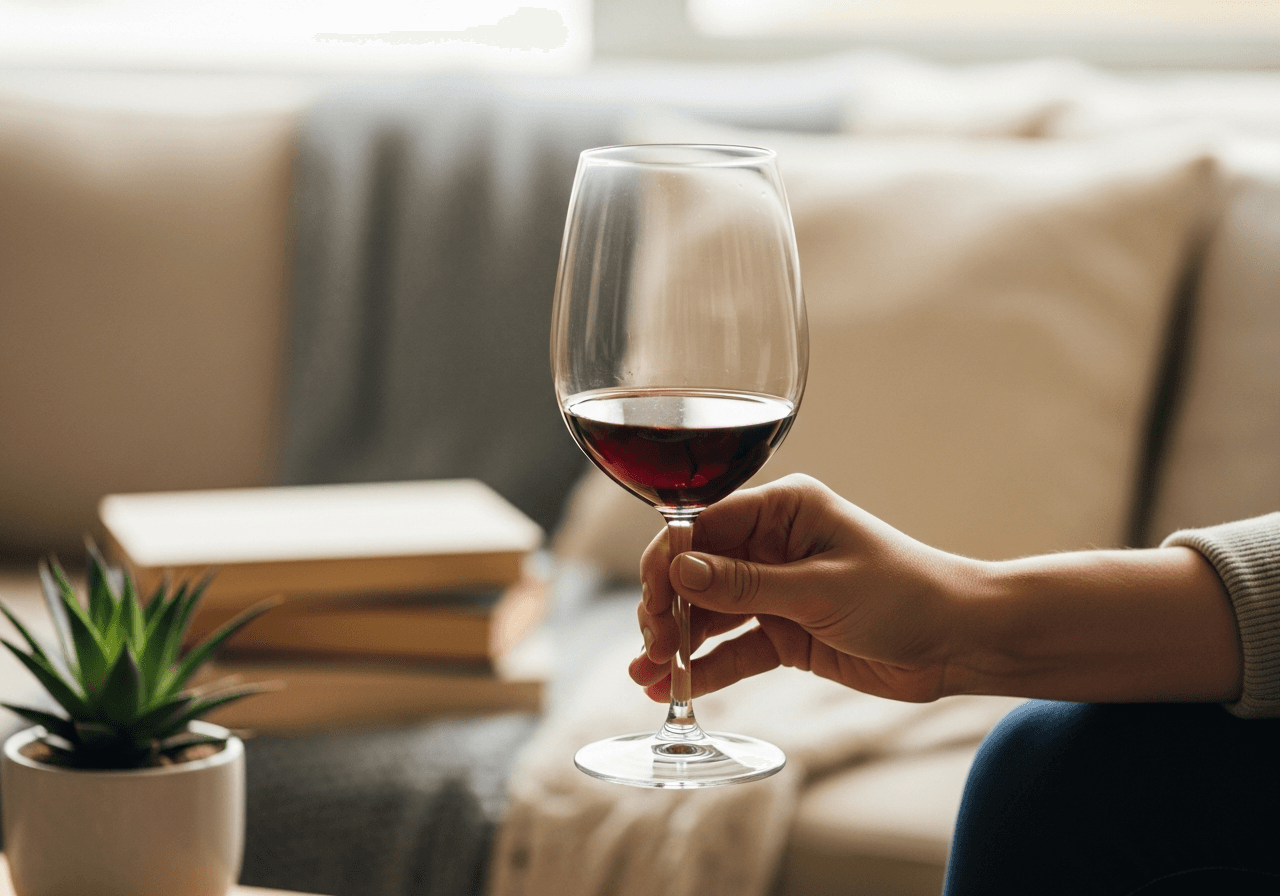
Susan and I had supper the other night with a younger couple who had brought over a bottle of Cotes du Rhone. The husband swirled, sniffed, and announced the wine was “jammy with a long finish and good minerality.” The wine was fine. The description was not. He had reached for three phrases he had read somewhere and stitched them together, and what he actually tasted, which I think was a pleasant, slightly peppery red, never made it into the sentence. I have heard versions of that little speech a thousand times in thirty years of representing small producers, and I want to spend this piece pulling the words apart so a reader in their sixties or seventies can describe a pour honestly without sounding like a back-label.
Why the vocabulary matters at all
It is not about showing off. The reason to have a working vocabulary for wine is that it sharpens your own attention. If you can put a word on what you are tasting, the next bottle gets easier to compare. Without that, every wine becomes either “good” or “not for me,” which is fine but limited. A modest vocabulary, used honestly, is worth more than a long one used to impress the table.
Most professional tasters move through a wine in four steps: look, smell, taste, finish. That is the structure the WSET Systematic Approach to Tasting has used for years, and the 2024-2025 updates simplified the language rather than expanded it, which tells you something about where the trade is heading. Plainer is better.
Look at it first
Hold the pour against a white napkin or the tablecloth. You are looking at two things: color and clarity.
- Color. Whites run from pale straw to lemon to gold to amber. Reds run from ruby to garnet to brick. A young Beaujolais is bright purple at the edge. A 1995 Barolo is a brick-orange brown. The shift from purple to brick is roughly the shift from young to mature. That is most of what color tells you.
- Clarity. Most wines are clear. A cloudy wine is either unfiltered on purpose or, less often, in trouble. Cloudy is not a flaw by itself, but it is information.
The old habit of describing “legs” — the streaks that run down the inside of the glass — is mostly theater. Legs tell you the wine has alcohol in it, which you already knew.
Smell it next
This is where most amateurs go wrong and where a producer will spend the most time. Get your nose into the glass, not above it. Breathe in like you are smelling a peach at the market, not auditioning for a perfume counter.
You are sorting the aromas into three rough buckets:
- Fruit. For whites: citrus (lemon, grapefruit), orchard fruit (apple, pear), stone fruit (peach, apricot), tropical (pineapple, mango). For reds: red fruit (cherry, strawberry, raspberry), black fruit (plum, blackberry, blackcurrant), dried fruit (fig, prune, raisin).
- Not fruit. Flowers (violet, rose), herbs (thyme, sage, mint, eucalyptus), spice (black pepper, clove, cinnamon, anise), earth (forest floor, mushroom, wet leaves), mineral (wet stone, chalk, flint), animal (leather, smoke).
- From the cellar. Oak shows up as vanilla, caramel, toast, coconut, or cedar. Age shows up as dried fruit, tobacco, leather, and a softening of everything sharp.
You do not have to name twelve aromas. Two or three accurate ones, said plainly, are worth more than a paragraph. “Cherry, a little black pepper, some old leather” is a usable description of a mature Cotes du Rhone. It is also true, which is the point.
Then taste it
Take enough into your mouth to coat your tongue, not a sip you would take of hot coffee. You are checking four things:
- Sweetness. Dry, off-dry, medium, sweet. Most table wines are dry. If your mouth feels even faintly sticky after you swallow, the wine has some residual sugar.
- Acidity. This is the lemon-juice sensation along the sides of your tongue. High acidity makes you want another bite of food. Low acidity makes the wine feel flabby. Acidity is what keeps a white wine refreshing and what lets a red wine age.
- Tannin. The drying feel on your gums and the inside of your cheeks, mostly in reds. From skins, seeds, and oak. A young Nebbiolo will dry you out like a strong tea. A Pinot Noir is gentle. Tannin softens with age.
- Body. Light, medium, full. The simplest way to think about body is to compare the wine to a glass of water (light), a glass of two-percent milk (medium), and a glass of whole milk or cream (full). It is about the weight on your tongue, not the alcohol on the label, though they often correlate.
Those four — sweetness, acidity, tannin, body — are the bones. Fruit and aroma are the flesh. Most amateurs talk about the flesh and skip the bones, which is why descriptions sound vague.
The finish, and then stop
Swallow. Wait. What is still there in ten seconds? Twenty? Is it pleasant or harsh? Is it short, medium, or long? A long finish that tastes like the wine is a good sign. A long finish that tastes like alcohol or bitter wood is not.
That is the whole exercise. Look, smell, taste, finish. You can do it in a minute at a dinner table without anyone noticing.
A short word about faddish vocabulary
Every few years a word makes the rounds in the trade and gets overused. Right now the two I would gently retire are “glou-glou,” which used to mean a juicy, low-tannin red you could drink by the gulp, and “funky,” which used to mean a savory, slightly barnyardy quality and now means whatever the speaker wants it to mean. Sommeliers I respect have started to question both, and a 60-year-old reader is under no obligation to use either.
Other words to handle with care:
- “Minerality.” Use it if you can point to a specific stone — chalk, slate, flint — that the wine reminds you of. Otherwise it is filler.
- “Jammy.” A real word. It means cooked, sweet, concentrated fruit, the kind you get from very ripe grapes. Often a compliment in California Cabernet, often a fault in a Burgundy.
- “Smooth.” Usually means low-acid and low-tannin. Sometimes a compliment, sometimes a polite way of saying boring.
- “Complex.” Use only when you can name three distinct aromas or flavors. Otherwise it is a brag.
A practical takeaway
The next time you open a bottle, write three lines about it on the back of an envelope. Color, two or three aromas, the four structural notes (sweet/acid/tannin/body), and one honest sentence on whether you liked it. Do that for ten bottles and you will have a better vocabulary than most people who have read three wine books. Do it for fifty and you will start to notice patterns: that you love high-acid whites with food, that you find new-oak reds tiring, that a 1990s Chianti you tried at your son-in-law's place is what you keep comparing things to.
That last part — the comparing — is what describing wine is actually for. You are building a private library of pours you have known, and the words are just the cards in the catalog. Keep the cards short, keep them honest, and the library does the rest.