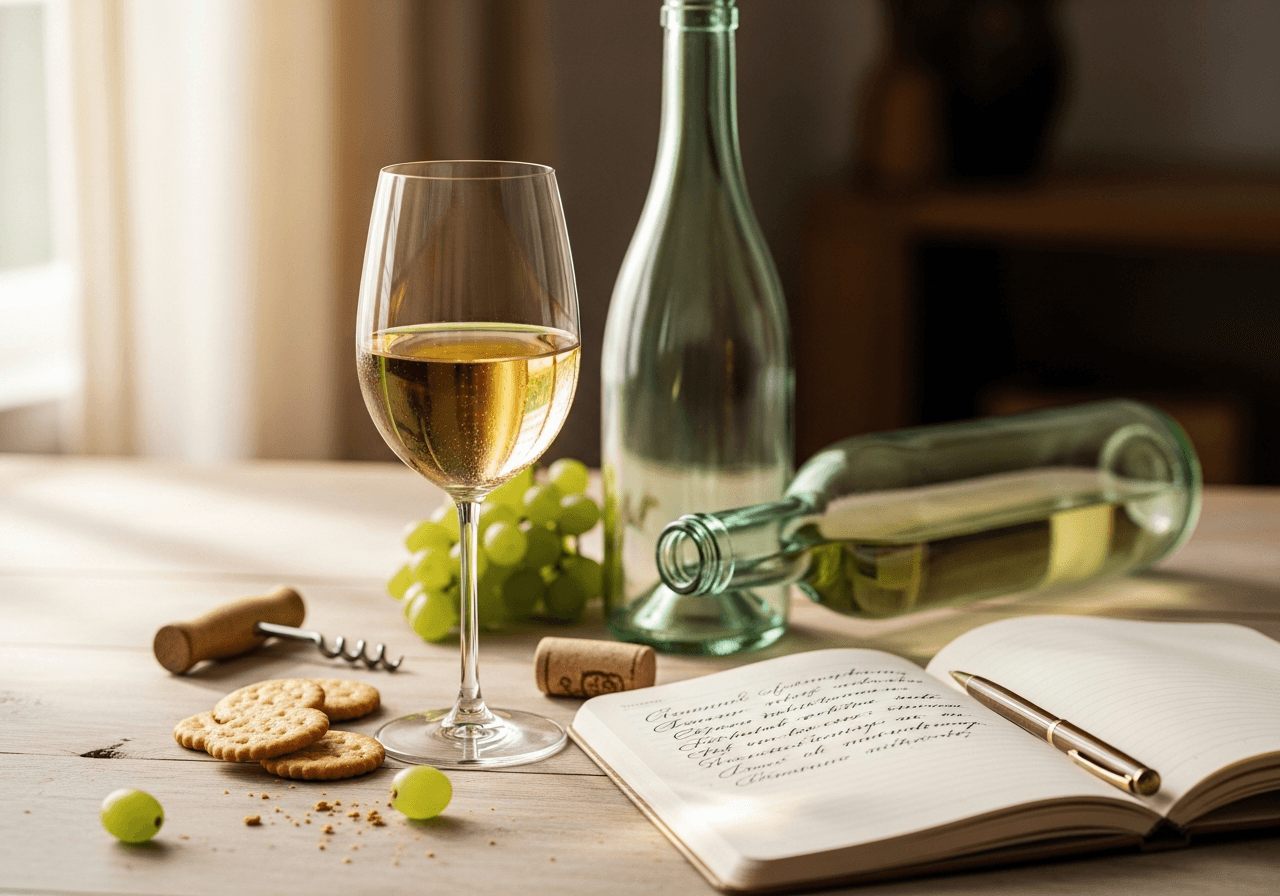
Susan and I keep a small chest fridge in the barn for whites. Nothing fancy, just a secondhand unit set to about 50 degrees, with a thermometer taped to the door because old refrigerators lie. On any given Tuesday you'll find a Muscadet from the Pepiere folks, a Gruner from a producer near Wagram I've been buying for twenty years, and whatever Albarino caught my eye at the shop in Healdsburg. None of it cost much. All of it drinks better than the $40 chardonnays my neighbor keeps bringing over.
People ask me, now that I'm retired and not selling anyone anything, where the real white wine values are. The honest answer is that good white wine has never been easier to find in this country, and it has never been more crowded with mediocre wine wearing fancy labels. So the question isn't really where to find white wine. It's how to filter the noise.
Start with a wine shop that actually tastes the wine
A good independent shop is worth more than any algorithm. Walk in, tell the person behind the counter what you ate last week and what you spent on it, and let them work. I trained dozens of buyers over the years and the good ones share two habits: they taste through their inventory regularly, and they will gently steer you off a bottle they don't believe in, even when it's on the table in front of you.
You can tell a serious shop within five minutes. The whites are stored upright and cool, not standing in a sunny window. The shelf talkers describe the wine rather than recite a magazine score. The staff drinks what they sell. If somebody hands you a chilled half-glass of something to try, you're in the right place. Tip them by buying a bottle even when you only came in for olive oil.
Don't dismiss the supermarket, but read the shelf
The wine press loves to scold people for buying at the grocery store. I never have. Susan picks up a Muscadet at our regional chain every other week, and it's the same Domaine de la Pepiere bottling a New York wine bar would charge $14 a pour for. The trick is knowing what you're holding.
A few rules I've found useful when the choices are overwhelming:
- Buy by producer, not by grape. A serious Muscadet from a known house beats almost any random Sauvignon Blanc at the same price.
- Look for importer names on the back label. Kermit Lynch, Louis Dressner, Neal Rosenthal, Eric Solomon, Skurnik, Polaner. If one of those names is on the back, somebody you can trust already vouched for the bottle.
- Watch the vintage. Most everyday whites are best within two or three years of the harvest date. A Sauvignon Blanc from four years ago sitting on a warm grocery shelf is a roll of the dice you don't need to take.
- Skip the bottle that's been chilling under a halogen lamp for a week. Heat and light are the two great enemies of white wine. If the case is hot, walk away.
The regions doing the heavy lifting right now
If you want to drink well without spending much, point yourself at places where tradition keeps prices honest. A handful of regions have been doing this for decades and most American drinkers still haven't caught up.
Muscadet, in the western Loire. Sevre et Maine bottlings from producers like Pepiere, Luneau-Papin, or Gadais are still in the $14 to $22 range in 2025. Bone-dry, briny, made for shellfish and weeknight roast chicken. The category is a working person's wine that happens to be one of the great bargains in the world.
Galicia, in northwest Spain. Albarino from Rias Baixas has had a moment for ten years running. A few producers are still keeping their feet on the ground. I drink Pedralonga's Terra de Godos and Lagar de Cervera, both of which sit comfortably under $25.
Austria. Gruner Veltliner in a liter bottle, the everyday format the Austrians actually drink, has become the workhorse white in our house. It pours easy with cabbage, sausage, salads, and lentil soup. Look for producers from Wachau, Kamptal, or Wagram.
The Loire's Chenin Blanc belt. Vouvray, Savennieres, Saumur. Producers like Thierry Germain at Domaine des Roches Neuves and Damien Laureau in Savennieres still over-deliver. A dry Chenin at five years old is one of the most undervalued pours in any shop.
Sicily and the volcanic islands. Carricante from Etna, Grillo from western Sicily, white wines from Aeolian producers. The category has gotten faddish, true, but the producers who were there before the fashion arrived are still making honest wine. Salinity, as the trade likes to call it now, is just the taste of stone and sea air.
Buying online: useful, with two caveats
The direct-to-consumer shipping landscape keeps improving. As of 2025, 48 states allow winery direct shipping. Mississippi and Arkansas just came online; Delaware passed a law so restrictive that almost no one will ship there. If you live in one of the open states, the world is open to you.
Two practical points before you hit the buy button. First, summer shipping kills more white wine than any other single thing. Pay for the cold-pack option from May through September, or schedule your shipment for October. A bottle that spent three days in a 95-degree truck is not going to taste right, even if the cork holds. Second, your signature is required on delivery in most states, so plan for someone to be home. Susan and I have lost an afternoon to driving out to a UPS depot more than once.
Wine clubs: a quieter case for them at 70
I spent thirty years competing with wine clubs, so it surprises me to say this, but a good club run by a thoughtful importer can be a kindness for somebody who doesn't want to spend their Saturday hunting for bottles. The ones worth your money are the ones with a real human curator behind them, where you can pick whites only and adjust quantity. A monthly four-bottle case from a Loire-focused importer can become the spine of your house wine for very little fuss.
What I steer people away from are the algorithm-driven mass clubs that ship whatever needs moving that month. You'll get a lot of overripe California chardonnay and very few surprises. If the website won't tell you who is choosing the wine, that's your answer.
One pour at a time
Here is the practical takeaway, and it's the same advice I've been giving people since the 1980s. Pick one new white wine a month. Buy two bottles, not one, because the second always tells you something the first didn't. Drink it at the table with food, not standing in the kitchen judging it. Take a small note in a notebook: where you bought it, what it cost, what you ate with it, whether you'd buy it again. After a year you'll have your own list of twelve reliable bottles, sourced from shops and importers and regions you've come to trust. That's what good white wine looks like at our age. Not a status object. A standing reservation at your own table.