
.png&w=3840&q=75)


.png&w=3840&q=75)


 Digital
 Digital
 Free CatalogDigital
 Digital
 Free ShippingDigital
 Up to 60% OFFDigital
.png&w=3840&q=75) Digital
Digital Digital
 Free ShippingDigital
 Digital
 Digital
 Free ShippingDigital
 Digital
 Digital
 Free ShippingDigital
 Free ShippingDigital
 Digital
.png&w=3840&q=75) Up to 50% OFFDigital
Up to 50% OFFDigital Digital
 Up to 60%Digital
 FREE CatalogDigital
 Digital
 Digital
 Digital
 Digital
 $5.99 ShippingDigital
 Up to 70% OffDigital
Browse free clothing catalogs by mail — women's, men's, plus-size, big & tall, and outerwear from Talbots, Lands' End, Bedford Fair, and Tog Shop.
Request print brochures by mail or flip through the digital editions online to see the full line in one sitting before you order. Whether you're rebuilding a wardrobe, hunting for a hard-to-find size, or stocking up on essentials you trust, a free clothing catalog by mail is still one of the most efficient ways to shop apparel in the U.S. — the entire seasonal line in front of you at once, organized by occasion, sized for the body you actually have, and priced so you can compare across brands without driving anywhere.
Clothing Catalog Categories at a Glance
Apparel catalogs split cleanly into a handful of buyer segments, and most of the marquee brands in this section specialize in one or two of them:
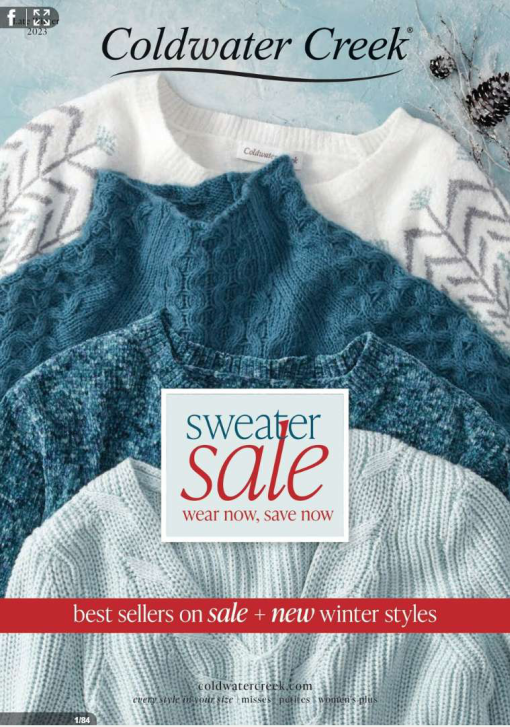
- Women's clothing catalogs — casual separates, dresses, blouses, sweaters, and workwear. Talbots, Coldwater Creek, J.Jill, Soft Surroundings, Bedford Fair, Tog Shop, and Chico's are the deepest catalogs here, each with a distinct fit and style point of view.
- Men's clothing catalogs — dress shirts, tailored suits, denim, polos, and rugged outdoor wear. Jos. A. Bank, Lands' End, Eddie Bauer, and L.L.Bean cover the dress-to-rugged spectrum, with separate big-and-tall and traditional-fit lines.
- Plus-size clothing catalogs — Woman Within, Lane Bryant, Jessica London, Roaman's, and Juno Active publish size-inclusive catalogs that consistently carry depth most local stores don't — 14W through 44W and beyond in core silhouettes.
- Big & tall men's catalogs — Casual Male, Destination XL, and Davis B&T specialize in extended sizing for men, with sleeve lengths and waist sizes you have to hunt for in mall stores.
- Activewear and athletic apparel — Champion, Title Nine, Skirt Sports, Royal Robbins, and RailRiders cover everything from training basics to women's sport-specific lines to travel-ready performance wear.
- Outerwear, jackets, and cold-weather catalogs — Eddie Bauer, Filson, Lands' End, and L.L.Bean publish dedicated outerwear sections with technical insulation specs, fill weights, and waterproof ratings most general apparel catalogs gloss over.
- Footwear catalogs — Merrell, Yellow Box, Harrys Shoes, and Eastbay range from comfort and walking shoes to athletic and skate footwear, often with the kinds of widths and arch specs you won't find on a single retail wall.
- Kids, teen, and family apparel — Pacsun, Tilly's, and Roxy serve the under-25 segment, while family catalogs from Lands' End and L.L.Bean cover everyone from toddler through grandparent.
What to Look For in a Clothing Catalog
Once you start flipping through clothing catalogs side by side, a few things matter more than the photography:
- Sizing standards and fit guides. Catalogs that publish bust, waist, hip, inseam, and sleeve measurements (rather than just S/M/L) get you to the right size on the first order. Talbots, Lands' End, Soft Surroundings, and Woman Within all publish detailed charts. Petite, tall, plus, and big-and-tall lines should each have their own grid — not a single chart with footnotes.
- Return and exchange policy. The serious clothing catalogs offer no-questions-asked returns within 60 to 90 days. L.L.Bean, Lands' End, and Talbots are particularly strong here. If a catalog buries the return policy or charges restocking fees, that tells you something.
- Fabric quality and content. The catalogs that last — J.Jill, Eddie Bauer, Filson, and heritage women's lines — publish actual fabric content (Pima cotton, Supima, merino wool weight in grams, denim oz). When the description says "soft fabric blend" with no specifics, that's usually polyester at a thinner gauge.
- Edition cadence and stock depth. Top catalogs publish 4-8 seasonal editions a year. The ones that arrive on a steady cadence (Talbots, Coldwater Creek, Chico's) typically maintain consistent stock — items pictured are almost always in inventory rather than sold out by the time the brochure lands.
- Coordination across the line. Strong clothing catalogs show you how pieces work together — separates that mix, palettes that carry across pages, accessories that complete a look. Catalogs that just photograph items in isolation give you less to work with when you're trying to build outfits.
How Catalog Shopping Beats the Mall
Three structural advantages keep print clothing catalogs relevant even when every brand has a website:
- Try-on at home, not under fluorescent dressing-room light. Order in two sizes, try them in your own mirror with your own clothes and shoes, and return what doesn't work. The best catalog companies have made this loop frictionless — free returns, prepaid labels, and exchange-by-phone.
- Easy returns mean lower risk on color and fit. A solid return policy is what unlocks ordering across sizes and shades. Try the slate AND the charcoal, keep one. The catalogs that win repeat business engineer their returns process to be effortless.
- Dedicated U.S. customer service. Most heritage clothing catalogs still staff phone lines with reps who know the line — they can tell you whether the cardigan runs true to size, whether the dress is fully lined, whether the pants come up high in the waist. That kind of pre-purchase advice is hard to find on a megastore site.
- Browse without algorithm filtering. Catalogs show you the whole line, not just the items a recommendation engine thinks you'll click. That's how you find the navy blazer you didn't search for but actually needed.
Free Clothing Catalogs by Mail
Catalogs.com hosts free print catalog requests and digital editions from a deep bench of apparel brands — every one of these is genuinely free to request by mail:
- Heritage women's apparel: Talbots, Coldwater Creek, J.Jill, Soft Surroundings, Chico's, Sundance, Appleseed's
- Classic and casual basics: Lands' End, Eddie Bauer, L.L.Bean, Bedford Fair, Tog Shop, Newport News, Norm Thompson
- Men's tailored and dress: Jos. A. Bank, Lands' End, Eddie Bauer
- Plus-size and extended sizing: Woman Within, Lane Bryant, Jessica London, Juno Active, Kiyonna, Silhouettes
- Big & tall: Casual Male, Destination XL, Davis B&T, Hanks Clothing
- Lifestyle and value-fashion: Collections Etc, Monroe and Main, Old Pueblo Traders, Bealls Florida, dressbarn, White House Black Market
- Activewear, outerwear, and sport: Champion, Title Nine, Skirt Sports, Royal Robbins, RailRiders, Filson
- Sleepwear, intimates, and swim: Soma, Bare Necessities, Figleaves, One Hanes Place, Newport News Swim, SwimsuitsForAll
- Footwear and accessories: Merrell, Harrys Shoes, Yellow Box, Brahmin, Fossil, Stauer
Each catalog card on this page shows the cover, brand, and a one-click free catalog request. If you'd rather not wait for the mail, the digital edition flips through the same brochure in a browser — same product line, same prices, no waiting.