

Baby furniture safety requirements
By Catalogs Editorial Staff
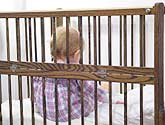
Are you buying new baby furniture?
According to the Consumer Products Safety Commission, more infants die every year in accidents involving cribs than with any other baby furniture product. Thousands of infants are injured seriously enough to require treatment in hospital emergency rooms.A baby crib is the only place you will ever consider placing your baby unattended. Safety is of paramount importance. The gold standard for a safe crib is a certification from the Juvenile Products Manufacturers Association (JPMA). The JPMA certifies cribs which meet or exceed the voluntary safety standards issued by the American Society for Testing and Materials ( ASTM ). These standards are stricter and safer than the mandatory safety standards promulgated by the Consumer Product Safety Commission ( CPSC ). Federal law mandates that all baby cribs sold in the United States must conform to the less stringent CPSC standards. So, if you want the very safest baby furniture, Check the JPMA certified product index for an up-to-the minute list of manufacturers of JPMA-certified baby cribs.
When buying baby furniture, always remember that the safety of the baby is at stake. Do not buy baby furniture just for the sake of saving money; you would risk the safety of the child in return. Be sure to use precaution and examine everything. Here are some tips from the Consumer Products Safety Commission if you’re buying a new, full size crib:
Before you continue reading about the Baby furniture safety requirements there is a special announcement we would like to share with you. Catalogs.com has negotiated special medicare rates for our vibrant community of seniors. If you are over the age of 60, you can head over to our Seniors Health Section which is full of information about medicare. All you need is your zip code and a few minutes of your time to potentially save 100s of dollars on your medicare bills.
1. Corner posts should not extend more than 1/16 inch (1 1/2 mm) above the top of the end panel. Corner posts can be catchpoints for items placed around a child’s neck or clothing worn by the child. 2. Mattress support hangers should be secured by bolts or closed hooks. All crib hardware should be securely tightened and checked frequently. 3. Bumper pads, if used, should (a) fit around the entire crib, (b) tie or snap into place, and (c) have straps or ties at least in each corner, in the middle of each long side, and on both the top and the bottom edges. To prevent your baby from becoming entangled in the ties, trim off excess length after tying. Use the bumpers until the baby can pull up to a standing position, then remove them so that the baby will not use them to try to climb out of the crib. 4. Remove and destroy all plastic wrapping materials. Never use plastic bags as mattress covers. The plastic film may cling to a baby’s face and cause suffocation. ~If a used crib is included with the baby furniture you already have, please take note of these precautions issued by the CSPC: 1. CPSC discourages the use of used cribs. However, if you must, use a crib that meets Federal safety regulations and industry voluntary standards (ASTM) and make sure it has a tight fitting mattress. Check the labeling on these products to make sure they meet safety requirements. 2. Check the crib and replace any missing parts, such as screws, bolts or mattress support hangers, before placing your child in it. Make sure all screws or bolts are securely tightened. Any screw inserted into a wood component that cannot be tightened securely should be replaced by one that fits. On cribs where the mattress support is suspended by hangers attached to hooks on the end panels, check frequently to be sure they have not become disconnected. Never use a crib with broken or missing parts. 3. Use a mattress that fits tightly. If you can fit more than two fingers between the edge of the mattress and crib side, the mattress is too small. An infant can suffocate if its head or body becomes wedged between the mattress and the crib sides. 4. Avoid older cribs with headboard and footboard designs that may allow an infant’s head to become caught in the openings between the corner post and the top rail, or in other openings in the top edge of the headboard structure. These openings may lead to strangulation. 5. Corner posts should be less than 1/16 inches high. (1-1/2 mm) unless the crib has a canopy. Do not use a crib that has decorative knobs on corner posts. If you already have a crib with such knobs, the knobs should be unscrewed or sawed off flush with the headboard or footboard. Sand off splinters and sharp corners. 6. Never use a crib that has loose or missing slats. Be sure that all slats are securely fastened in place and the space between slats is no more than 2-3/8 inches (60 mm) to avoid head entrapment/strangulation. 7. If you paint or refinish the crib or other baby furniture, use only high quality household lead-free enamel paint and let it dry thoroughly so there are no residual fumes. Check the label on the paint can to make sure the manufacturer does not recommend against using the paint on items such as cribs.
When shopping for baby furniture, always think of safety first!If a used crib is included with the baby furniture you already have, please take note of these precautions issued by the CSPC: 1. CPSC discourages the use of used cribs. However, if you must, use a crib that meets Federal safety regulations and industry voluntary standards (ASTM) and make sure it has a tight fitting mattress. Check the labeling on these products to make sure they meet safety requirements. 2. Check the crib and replace any missing parts, such as screws, bolts or mattress support hangers, before placing your child in it. Make sure all screws or bolts are securely tightened. Any screw inserted into a wood component that cannot be tightened securely should be replaced by one that fits. On cribs where the mattress support is suspended by hangers attached to hooks on the end panels, check frequently to be sure they have not become disconnected. Never use a crib with broken or missing parts. 3. Use a mattress that fits tightly. If you can fit more than two fingers between the edge of the mattress and crib side, the mattress is too small. An infant can suffocate if its head or body becomes wedged between the mattress and the crib sides. 4. Avoid older cribs with headboard and footboard designs that may allow an infant’s head to become caught in the openings between the corner post and the top rail, or in other openings in the top edge of the headboard structure. These openings may lead to strangulation. 5. Corner posts should be less than 1/16 inches high. (1-1/2 mm) unless the crib has a canopy. Do not use a crib that has decorative knobs on corner posts. If you already have a crib with such knobs, the knobs should be unscrewed or sawed off flush with the headboard or footboard. Sand off splinters and sharp corners. 6. Never use a crib that has loose or missing slats. Be sure that all slats are securely fastened in place and the space between slats is no more than 2-3/8 inches (60 mm) to avoid head entrapment/strangulation. 7. If you paint or refinish the crib or other baby furniture, use only high quality household lead-free enamel paint and let it dry thoroughly so there are no residual fumes. Check the label on the paint can to make sure the manufacturer does not recommend against using the paint on items such as cribs.
When shopping for baby furniture, always think of safety first!
Popular Savings Offers

Free Catalog
Get your Free Catalog and shop the best selection and collection of Sturbridge Yankee Workshop Products on the Clearance Sale

Sturbridge Yankee Workshop


10% OFF
Get 10% off when you sign up for texts and free shipping on your first order over $50

The Lighter Side
Free Catalog
Get your Free Catalog and shop the best selection and collection of Designer Drapery Hardware Products on the Clearance Sale

Designer Drapery Hardware
Free Catalog
Get FREE Catalog to browse Cabela's Camping products
.jpg)
Cabela's Camping


.jpg)













_60.jpg?w=3840 "Order Free Catalogs from MetroStyle (Lerner)")