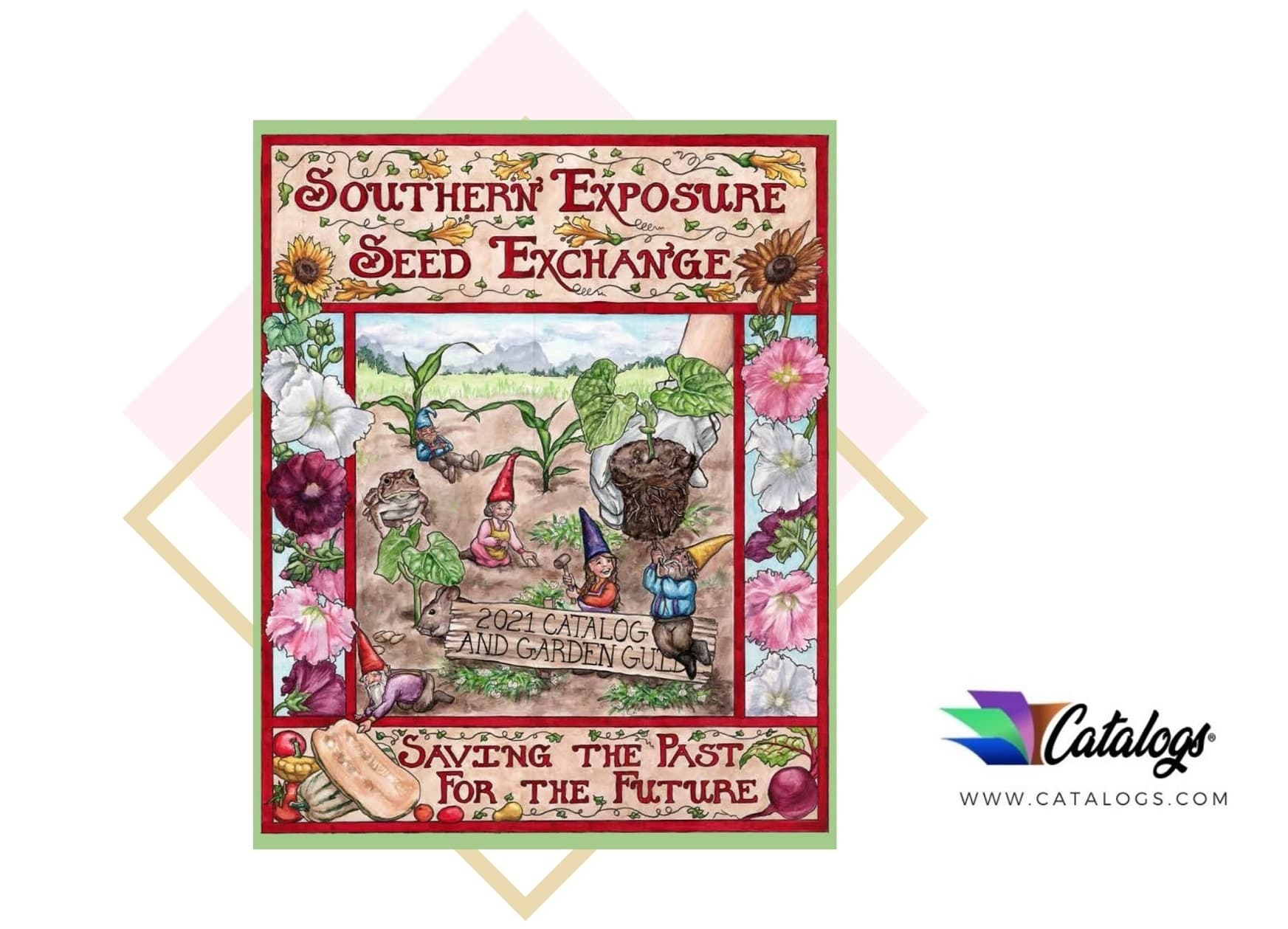
Out here on the place we still get a fair bit of seed in the mail. Eileen orders thread and quilt batting that way for the shop, and I do the same with garden seed. The Southern Exposure Seed Exchange catalog is one I keep on the kitchen table every winter from about Christmas through March. It's free, it shows up in the mailbox, and it's got the kind of varieties you don't find on a wire rack at the farm store.
Folks down the road keep asking me how to get on the mailing list. So here's the short version, and then I'll tell you why I think the catalog earns its keep.
The short version: how to get the catalog
You've got two reliable ways to ask for one.
- Online. Go to southernexposure.com. There's a Request a Catalog page on the main menu. You fill in your name, your full mailing address, and an email. Takes about a minute.
- By mail. Drop them a postcard at P.O. Box 460, Mineral, VA 23117. Print your address clearly. They've been at that address for years.
You can also request one through catalogs.com, which is the easy route if you'd rather order a few catalogs at once and not type your address into a different box every time.
Once you ask, expect it to show up inside of two weeks if it's catalog season. They print up the new edition in the late fall and start mailing in December. If you ask in July, you may wait until the new one's ready. They'll usually note that on the form. They mail to U.S. addresses only.
Who they are, briefly
Southern Exposure was started back in 1982 by a fellow named Jeff McCormack out of Charlottesville, Virginia. In 1999 he sold it to Acorn Community, an intentional farm down there, and they've run it as a worker-owned cooperative since. Headquarters and the seed warehouse are in Mineral, Virginia, about an hour northeast of Charlottesville.
What they specialize in is heirloom and open-pollinated seed, with a focus on what does well in the Mid-Atlantic and the Southeast. That doesn't mean a Nebraska gardener can't use them. I do, every year. It just means a lot of their varieties were saved by folks dealing with heat and humidity, which I reckon is good insurance for the kind of summers we've been having out here on the plains.
What's in the catalog
Last count they were running better than 800 varieties. The catalog itself is more like a garden guide with a price list bolted onto it. You'll find:
- Vegetables. A long list, including some Southern staples I had to learn about, like roselle, Sea Island peas, and naturally colored cotton. Plus the regulars: tomatoes, beans, squash, sweet corn, lettuce.
- Herbs. Culinary and medicinal both. The basil section alone is bigger than my wife's spice rack.
- Flowers. Cosmos, zinnias, marigolds, sunflowers. Eileen plants the zinnia mix along the driveway every May.
- Cover crops and grains. Buckwheat, winter rye, wheat, sorghum. If you're putting a garden patch to bed for the winter or trying to build the soil back, this is a good place to look.
- Garlic and perennial onions. Shipped at planting time in the fall.
They also sell a few books, growing supplies, and the occasional tool. Not a lot, but the books on seed saving are worth the price.
Why I keep ordering from them
Three reasons, mostly.
One, the seed germinates. I've tried plenty of cheap seed. You plant a row, half of it doesn't come up, you waste a Saturday and a packet. Their germination rates are honest, and they print the test date right on the packet so you can see for yourself.
Two, you can save the seed. Heirloom and open-pollinated means if you let a tomato go ripe and squeeze out the seed, next year's plant is the same as this year's. With hybrids you can't do that. I'm not saving seed off everything, but on a few favorites it's nice to know I could.
Three, the catalog teaches you something. Each variety has a real description, written by somebody who's actually grown it. Days to maturity, where it does best, what it tastes like. After fifty-some years of gardening I still pick up a thing or two reading through it on a January evening.
If you'd rather call or shop online
You don't have to wait for the paper catalog. Southernexposure.com lets you browse the whole inventory by Vegetables, Herbs, Flowers, Garlic, and so on. You can filter by region or by what does well in heat. If you've already got a catalog and just want to place an order quick, type the item number into the search box and it'll pull the variety right up.
Their phone is 540-894-9480. Hours move with the seasons:
- January through May: Monday through Friday, 9:00 AM to 5:00 PM Eastern.
- June through December: Monday through Friday, 11:00 AM to 3:00 PM Eastern.
Shorter summer hours make sense. Spring is when seed companies are running flat out, and by July most of the orders have already shipped.
Other free catalogs in the same neighborhood
If you like Southern Exposure, you'll probably get along with a couple of others worth a look. Vesey's Seeds up in Canada has a strong selection for short-season gardens, which matters in places like ours where frost can show up in late September. Pepper Joe's is the one to hit if you want hot peppers and not much else. And Tulips.com is fine if your wife's wanting bulbs in the fall.
None of those are direct competitors with Southern Exposure, really. They each fit a different corner of the garden, and there's no rule that says you have to pick one.
A practical note for older gardeners
I'm seventy-six. My knees aren't what they used to be, and I've cut my garden down from a half-acre to about a quarter of that. If you're in the same boat, here's what I'd tell you about ordering from a catalog like this one.
Stick to varieties that don't need a lot of fuss. Bush beans over pole beans. Determinate tomatoes if you don't want to be staking and pruning all summer. Lettuce mixes you can cut once and let regrow. The catalog tells you which is which.
Order earlier than you think you need to. Popular varieties sell out by March, and a paper catalog is no help if the page you want is empty. I put my order in around the second week of January, and it's on the porch before the snow's gone.
And don't be shy about calling them with a question. The folks who answer the phone have grown most of what's in the book. That's not something you get from the big-box garden center.
The Southern Exposure catalog is free for a reason. They want you to plant, you want to plant, and the seed has to get from their barn to yours somehow. Drop them your address and they'll do the rest.