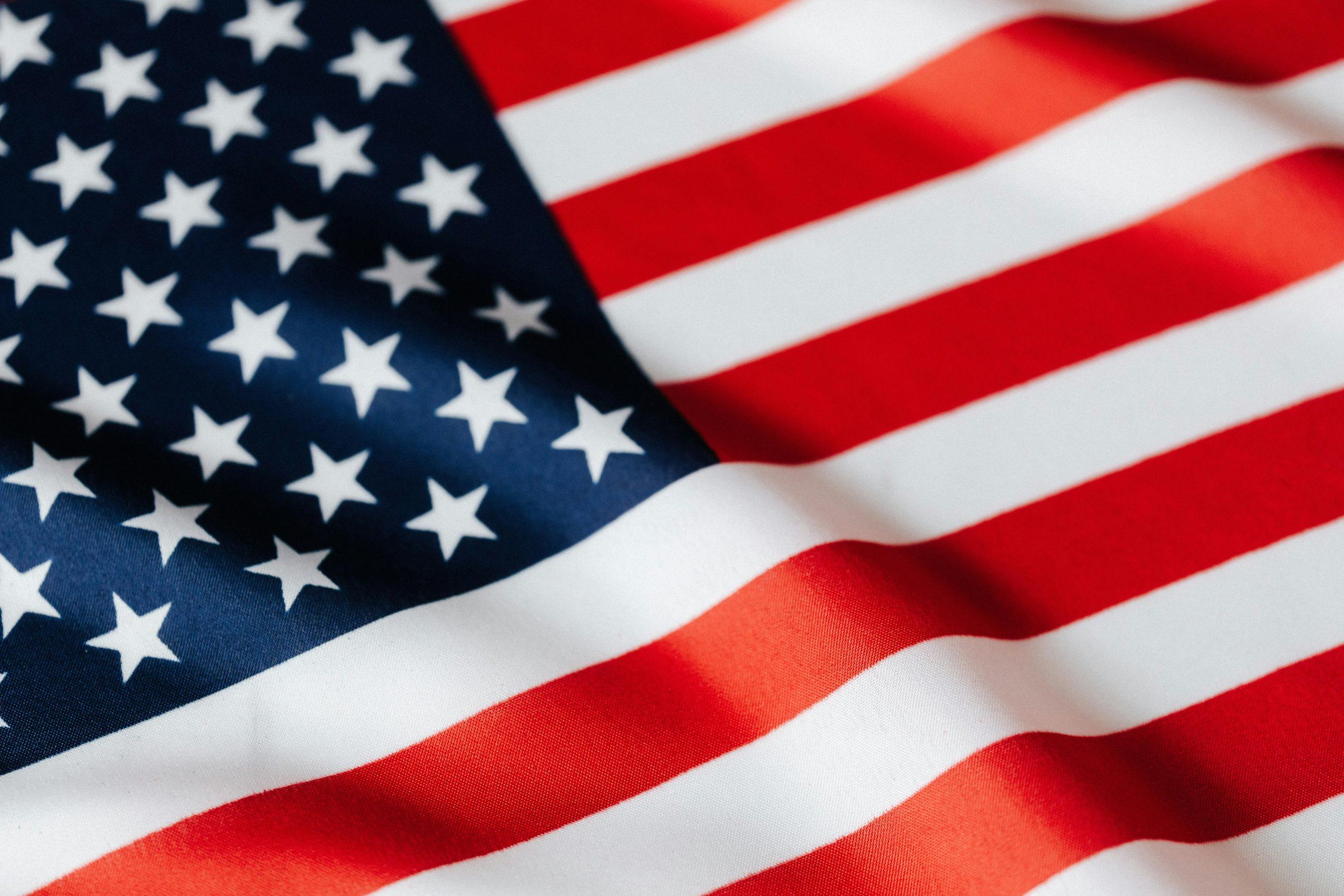
It turns out the most familiar story about the American flag, the one most of us were handed in second grade, is the one historians are least sure about. Betsy Ross, the upholsterer in Philadelphia, supposedly stitched the first Stars and Stripes in May of 1776 at the request of George Washington himself. It is a lovely image. The trouble is that it did not surface in print until 1870, almost a century later, when her grandson William Canby presented the family account to the Historical Society of Pennsylvania. The Smithsonian and the National Museum of American History both note that no contemporary record places her with that first flag. So we begin our tour with a gentle reminder: a great deal of what we think we know about the flag is family lore that hardened into textbook fact.
What most people don't realize is that the flag has been redesigned, by act of Congress or executive order, twenty-six times. The version flying over your post office today is, technically, the twenty-seventh official design. That is more revisions than the U.S. Constitution has had amendments, which I find delightful as someone who spent a career chasing primary documents.
The first flag, and the first law
On June 14, 1777, the Second Continental Congress passed what is now called the First Flag Act. The text is short enough to quote: "Resolved, that the flag of the United States be made of thirteen stripes, alternate red and white; that the union be thirteen stars, white in a blue field, representing a new constellation." That is the entire law. There is nothing in it about who would sew it, how the stars should be arranged, or what the colors meant. Those details were left to whoever had a needle and a roll of bunting.
Because the law was so loose, early American flags varied wildly. Some had stars in a circle. Some had them in rows. Some had six points, some had eight. The famous "Betsy Ross" pattern, with thirteen five-pointed stars in a ring, is one of several arrangements that flew during the Revolution. June 14 is now observed as Flag Day, established by President Wilson in 1916 and made official by an act of Congress in 1949. It is, as the original article noted, a holiday almost nobody marks. I always do, mostly because it falls on my late husband's birthday.
Mary Pickersgill, and the woman whose name almost slipped away
If Betsy Ross is the legend, Mary Pickersgill is the documented fact. In the summer of 1813, with war against Britain underway, Major George Armistead at Fort McHenry in Baltimore commissioned two flags from Pickersgill, a thirty-seven-year-old widow who ran a flag-making business out of her home on East Pratt Street. The smaller "storm flag" measured 17 by 25 feet. The larger "garrison flag" measured an enormous 30 by 42 feet, big enough that the British fleet could see it from miles out in the harbor. The Pickersgill commission came to $405.90, which the National Park Service notes is the equivalent of roughly $6,800 in today's dollars.
Mary did not sew it alone. She had help from her thirteen-year-old daughter Caroline, her nieces Eliza and Margaret Young (also young teenagers), her mother Rebecca Young, and a thirteen-year-old African American indentured servant named Grace Wisher. For most of the twentieth century, Grace's name was left out of the story altogether. The Star-Spangled Banner Flag House museum in Baltimore, which still stands on the spot where the flag was stitched, has worked in recent years to put her back into the historical record. It is a small correction, but a meaningful one.
The garrison flag, of course, is the one Francis Scott Key saw "by the dawn's early light" on September 14, 1814, after the British bombardment of Fort McHenry. The poem he wrote that morning eventually became, in 1931, our national anthem. The flag itself, much patched and now considered fragile beyond repair, is on permanent display at the Smithsonian's National Museum of American History in Washington, in a special low-light, climate-controlled chamber. If you have not seen it in person, it is well worth the trip.
Why the design kept changing
Between 1777 and 1960, every time a state joined the Union, the flag eventually changed to match. A few of the milestones worth noting:
- January 13, 1794 — After Vermont and Kentucky joined, Congress added two stars and two stripes, giving us the unusual fifteen-stripe flag. This is the version Mary Pickersgill sewed.
- April 4, 1818 — Congress reversed course on the stripes. The Flag Act of 1818 returned the count to thirteen stripes for the original colonies and ruled that one star would be added for each new state, on the Fourth of July following its admission. That rule still holds.
- June 24, 1912 — President Taft issued an executive order that, for the first time, fixed the flag's exact proportions and the precise arrangement of the stars (then forty-eight, in six rows of eight). Before this, the proportions were anyone's guess.
- January 3, 1959 — Alaska joined, and Eisenhower ordered the stars rearranged into seven staggered rows of seven.
- August 21, 1959 — Hawaii joined, and Eisenhower ordered the rearrangement that gave us the present fifty-star pattern: nine rows staggered horizontally, eleven rows staggered vertically.
The fifty-star flag became official on July 4, 1960. As of this writing, in early 2026, it has now flown for sixty-five years, longer than any other version. The previous record-holder, the forty-eight-star flag, lasted forty-seven years.
About those colors
You will often hear that red stands for hardiness and valor, white for purity and innocence, and blue for vigilance, perseverance, and justice. That is true, but only sort of. Those meanings come from a 1782 description of the Great Seal of the United States by Charles Thomson, secretary of the Continental Congress. He was describing the seal, not the flag. The flag itself was never given an official symbolic explanation by Congress. Over time, the seal's symbolism was simply applied to the flag, and now we all repeat it as if it had been there from the start. It is one of the small, well-meaning fictions that history quietly produces.
A practical note for the rest of us
If you fly a flag at home, the U.S. Flag Code (Title 4 of the U.S. Code) lays out the etiquette. It is not legally enforceable, but most of us were taught it growing up: don't let it touch the ground, don't fly it in heavy weather unless it is an all-weather flag, illuminate it if you fly it at night, and retire a worn flag respectfully, usually by burning. Most American Legion and VFW posts will accept worn flags for proper retirement, and many do a ceremony every June 14. If you have a tattered flag in the garage that has been bothering you, that is the simplest way to handle it.
The flag is one of those rare objects that has been continuously in use for almost two hundred and fifty years and yet still rewards a closer look. The next time you pass one, remember the thirteen-year-old indentured girl in Baltimore, the upholsterer in Philadelphia whose grandson loved her stories, and the twenty-six committees and presidents who kept reaching for the scissors. It is a more crowded history than the schoolbook version, and a better one.