Forty-two years behind the counter at Calabrese & Sons in Ybor City, and you learn one thing fast: the famous fellas walking in the door smoke the same way the regulars do. Slow, patient, with two hands sometimes. I had a few movie people drift through over the years on their way to or from Miami, and the tell wasn't the watch or the entourage. It was whether they cut the cap clean and whether they waited for the foot to glow even before they put their lips to it. That patience, more than anything, is what separates a smoker from a poser.
So when readers ask me about Hollywood's cigar guys, I try to answer the way my father, who rolled at Cuesta-Rey in the fifties, would have answered. With respect for the leaf, a little Tampa pride, and no nonsense about who is or isn't a hunk. A good cigar doesn't care about that. Still, the names below have spent real time with a stogie, and most of them know a Connecticut shade from a Maduro. That's enough credential for me.
The old guard, still around
Arnold Schwarzenegger
Arnold is probably the most public cigar man working today. He came to it in the seventies through Sargent Shriver, his father-in-law, and never apologized for the habit. He's been photographed with everything from a Cohiba to a Davidoff over the years, and he's brought plenty of co-stars into the fold. The man treats a cigar as an after-lunch ritual on the patio, which is more or less how it should be treated.
Tom Selleck
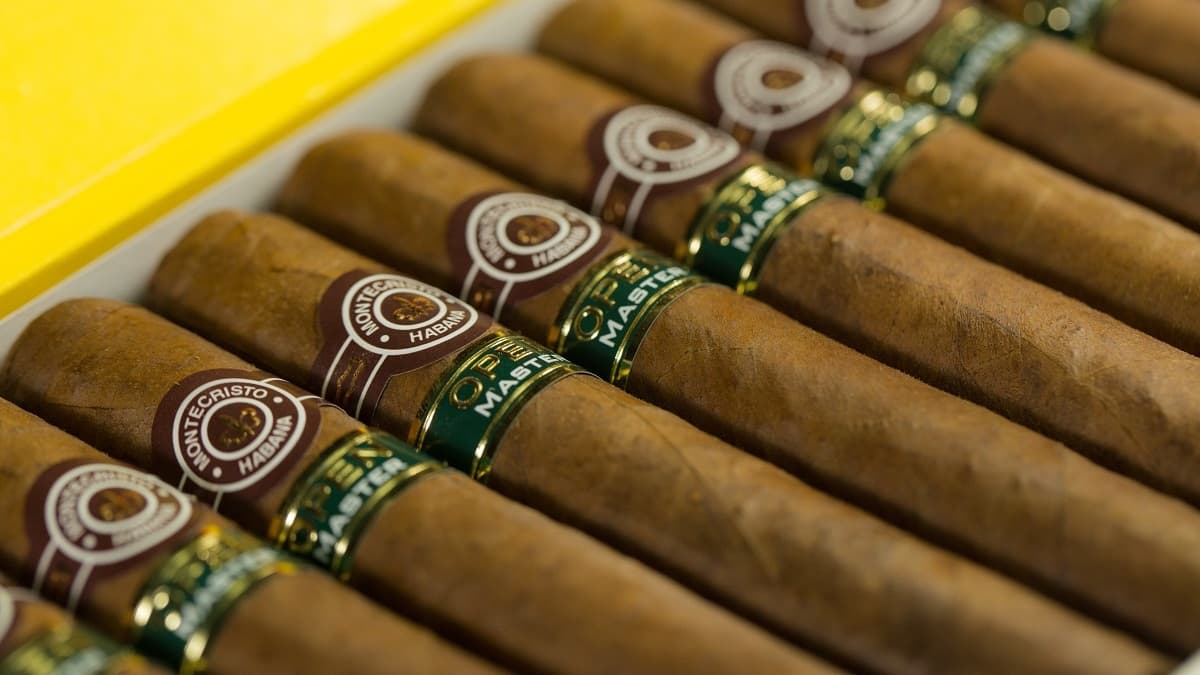
Selleck has talked about smoking while he reads scripts, and his go-to has been the Montecristo No. 2 — a torpedo any veteran would recognize across a room. He's a slow smoker by reputation, which fits the man. There's no rush to a No. 2; you don't smoke a torpedo if you're in a hurry.
Jack Nicholson
Jack is the Lakers-courtside cigar man, even if the arena rules long ago took the lit version out of his hand. Montecristo again, which tells you something about that generation of actors: they came up in the era when Cuban tobacco was the gold standard, and the Dominican-grown Montecristo carried that flag stateside.
Michael Douglas
Douglas had a serious health scare years back, and he's been straightforward in interviews that he scaled the habit way down. I respect that. Cigars are not innocent — I've buried friends who didn't take their checkups seriously. If you smoke, see your doctor twice a year. Punto. Douglas still appreciates the leaf, but he treats it like the occasional companion it should be at our age, not a daily appointment.
Harrison Ford
Ford keeps quiet about most of his preferences, which I appreciate. He's been seen with a cigar on plenty of occasions over the decades without making a big show of it. That's how most of my regulars at the shop carried themselves too. You buy your sticks, you take them home, you sit on the porch. You don't need a press release.
The complicated names
Two names from the older list — Mel Gibson and Bruce Willis — deserve a word. Gibson's public reputation has been bumpy for a long time now, and that's his business, not mine. Willis, sadly, retired from acting in 2022 because of aphasia and his family later confirmed a frontotemporal dementia diagnosis. I bring that up only to say a man's health is bigger than any list of hobbies, and our prayers go out to the family.
The presidential note
Anyone writing about famous cigars eventually circles back to John F. Kennedy. The story everyone tells is that he had his press secretary, Pierre Salinger, round up something in the neighborhood of a thousand H. Upmann Petit Coronas the night before he signed the Cuban embargo in February 1962. Whatever the exact count, the embargo has held for more than sixty years. As of 2026, Cuban cigars are still illegal to import, sell, or bring back in your luggage in the United States — the brief Obama-era allowance for personal-use cigars from Cuba was reversed in September 2020. The Treasury Department's OFAC rules are clear. If somebody offers to sell you a box of Cohibas at a hotel bar in Mexico City, walk away. The fake-Cuban market is enormous, and the real ones, even when authentic, cannot legally come home with you.
What you should actually take from this
None of these men became cigar smokers because they were famous. They became cigar smokers because somebody — a father, a father-in-law, an old director, a Cuban grandfather like mine — sat them down and showed them how. That's the only way the tradition continues. La fabrica doesn't run on celebrity. It runs on apprenticeship.
So if you're 60-something and thinking about picking up the occasional cigar, or coming back to it after a long break, here's what I'd tell a man who walked into the old shop:
- Start mild. A Connecticut-shade wrapper from Ashton, Macanudo, or a milder Oliva will be kinder than a full-bodied Maduro. Save the Padron 1964 Anniversario for after you've remembered how to draw properly.
- Buy one or two, not a box. Tastes shift after sixty — mine certainly did. What suited you at forty may not suit you now. A good local tobacconist will sell you singles.
- Mind the cut. A clean guillotine cut, just above the cap line. Don't go deep; the cigar will unravel. A punch works for parejos. A V-cut for torpedoes if your hand is steady.
- Use a butane torch or a soft cedar match. Skip the Zippo — fluid will taint the foot. Toast the foot first, then take your first draw with the flame about an inch away.
- Don't inhale. Cigar smoke is meant to roll around the mouth. If you find yourself pulling it into the lungs out of habit from cigarettes, set the cigar down. Get up. Walk a few steps.
- Smoke outside. Be considerate of your wife, your neighbors, your grandkids. Theresa banished my evening cigar to the back patio in 1985, and forty years on, I still think she was right.
- See your doctor. Cigars aren't cigarettes, but they aren't candy. Annual physicals. Dental every six months — the gums and tongue are where cigar trouble shows first.
One last thing
If you're ever in Tampa, take the heritage walking tour the Tampa Cigar Federation runs in Ybor City. Some of those buildings have been rolling tobacco since the 1880s. Names like El Reloj, Hav-A-Tampa, Cuesta-Rey — they're not just plaques on brick. They're the actual neighborhood that made America's cigar trade, and they're still here, even after most of the big factories closed down. That, more than any Hollywood photograph, is what the cigar is really about.