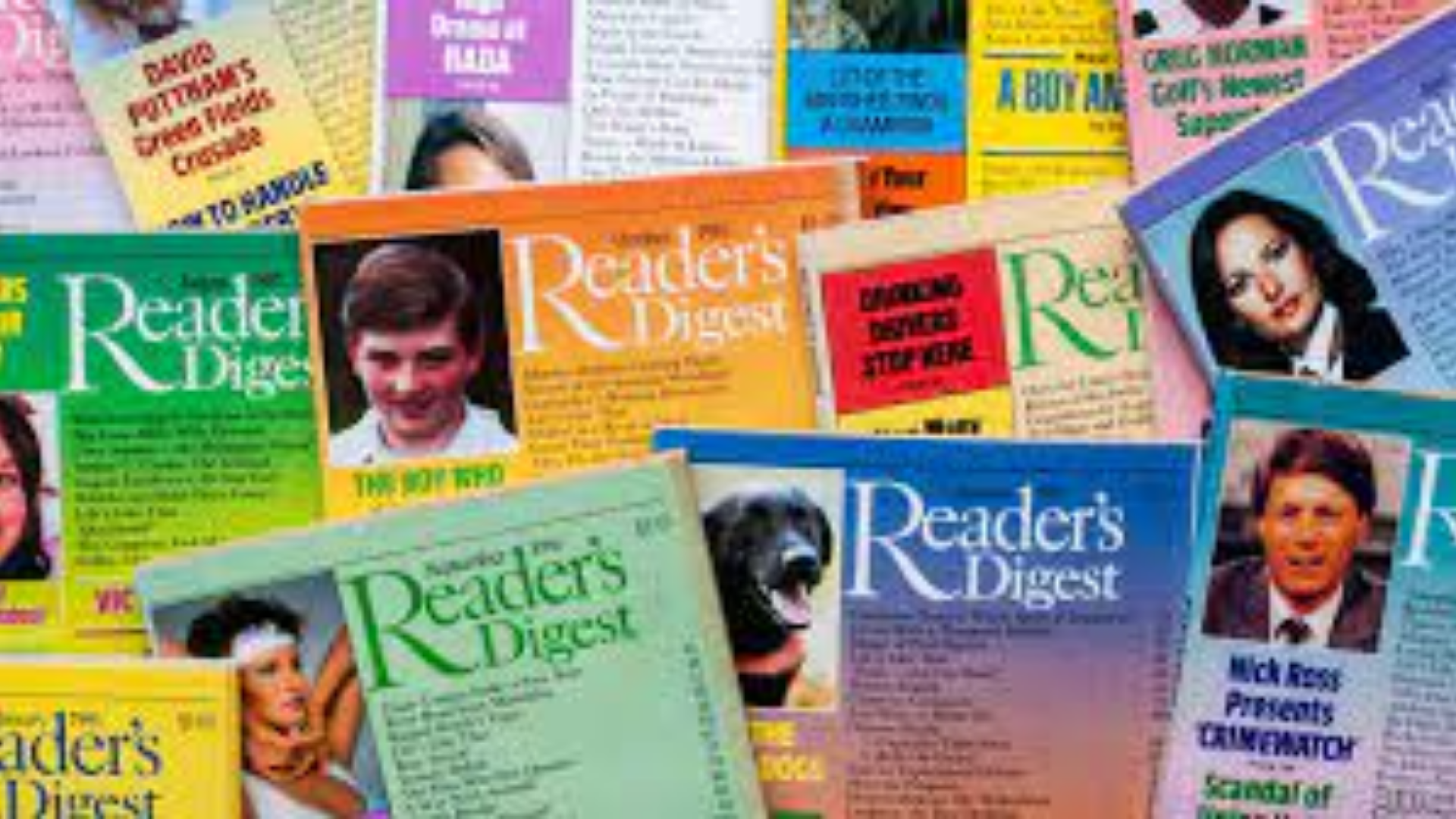
One of the first questions I learned to answer at the reference desk in Madison was some version of, "Is Reader's Digest still around?" The answer, as of this writing in 2026, is yes, with a number of careful footnotes attached. The little magazine that DeWitt and Lila Wallace launched in February 1922 is still being printed in the United States, though on a much quieter schedule than the one your parents or grandparents would remember. Other parts of the empire have closed entirely. It is, in other words, a story worth telling carefully.
A Quick Refresher on How It Got So Big
It's worth noting that Reader's Digest was a genuine media phenomenon for most of the twentieth century. The Wallaces published the first issue in February 1922 out of a basement in Greenwich Village, and the formula, condensed articles drawn from other periodicals, plus a few originals, was unusually well suited to busy readers. By the late 1930s the magazine had editions in more than a dozen languages. According to the magazine's own historical materials and the Encyclopedia Britannica entry, U.S. circulation passed seventeen million at its peak in the 1970s, which made it for a long stretch the best-selling consumer magazine in the country.
Along the way it became more than a magazine. Reader's Digest Condensed Books, the boxed sets that used to fill so many living-room shelves, ran from 1950 well into the 2000s. The company also published cookbooks, atlases, the Family Handyman series, and the I Am Joe's Body articles that a lot of readers of a certain age still remember fondly. My father kept a Reader's Digest Complete Do-It-Yourself Manual on a shelf in the garage; I think the spine outlasted three lawn mowers.
So What Actually Happened
The short version is that the same forces that thinned out so much of American print, the internet, declining ad revenue, fewer households subscribing to anything that arrived in the mail, hit Reader's Digest hard. The Reader's Digest Association filed for Chapter 11 bankruptcy in 2009 and again in early 2013. After the second filing, the company emerged smaller and more focused, and in 2015 it rebranded its corporate parent as Trusted Media Brands. The Reader's Digest title survived; it just stopped being the center of a sprawling publishing operation.
Trusted Media Brands has been owned by North Equity Holdings since 2019. The company kept the Reader's Digest name, along with Taste of Home, Family Handyman, and the Birds & Blooms titles, and it has spent the last several years investing more heavily in digital properties. Bonnie Kintzer led the company as CEO for about eleven years before stepping down in 2025; Stephen Colvin was named CEO that May, with Marty Moe overseeing digital operations as president starting in April 2024.
The Print Magazine in 2026
Here is the part that often surprises people. The U.S. print edition of Reader's Digest is still publishing. It now comes out roughly six times a year rather than monthly, with combined issues such as March/April, May/June, August/September, and October/November. There is also a Reader's Digest Large Print edition, which has long been a favorite at the library among patrons who simply want easier-on-the-eyes reading. Subscription rates as of early 2026 are listed on the rd.com order page, and back issues are available through digital newsstands like Zinio.
The website, rd.com, is now where most of the company's reach lives. It carries the recipe roundups, jokes, grammar quizzes, and human-interest pieces that the print magazine helped invent, and according to publicly reported figures it draws tens of millions of unique visitors a month. The Reader's Digest brand, in other words, is doing more work online than in your mailbox now, which is a familiar pattern for almost every legacy magazine I can think of.
The International Story Is More Complicated
This is the part where the news of recent years has been harder. Reader's Digest UK, founded in 1938, ceased publishing in April 2024 after eighty-six years. Its final print issue was dated May 2024, and the company that operated it went into administration. The UK edition had its own bumpy history, including an earlier collapse in 2010 tied to a pension shortfall, and was sold off twice before this final closure. According to coverage in The Drum and Printweek, circulation had fallen below two hundred thousand by the end, down from a peak above two million.
Other international editions have been pared back as well. Reports in 2025 indicated that operations in Hong Kong, Taiwan, and parts of Southeast Asia have been wound down. The Australian, Canadian, and a handful of other editions were still publishing as of early 2026, but the global footprint is much smaller than it was even a decade ago.
If You Want to Read It Today
If you'd like to pick the magazine back up, here are the practical avenues, in plain order:
- Subscribe directly: rd.com handles U.S. print and digital subscriptions, including the Large Print edition.
- Check your local library: Many public libraries still carry Reader's Digest in print, and most also offer it through digital lending services such as Libby/OverDrive or Flipster. It's a no-cost way to test whether the current six-times-a-year version still suits you.
- Buy single issues: Pharmacies and grocery checkouts often still stock current issues, and digital newsstands like Zinio sell back issues going several years.
- Used Condensed Books: The classic green-and-gold volumes are widely available secondhand; AbeBooks, ThriftBooks, and most library used-book sales are reliable sources, often for two or three dollars apiece.
What I'd Tell a Patron Today
The honest answer to "What happened to Reader's Digest?" is that it didn't disappear. It contracted, reorganized, and survived in a quieter form. The U.S. magazine is still being printed in 2026; the website does most of the day-to-day work; the UK edition closed in 2024; and the boxed Condensed Books sets are now collector's curiosities rather than living-room furniture. If you grew up reading it at your grandmother's house, the magazine you'd pick up today is recognizably the same publication, shorter, more health and humor forward, but still trading in the same friendly, condensed style. That's a longer life than most twentieth-century magazines have managed, and it's worth noting.