Back in 1978, when I was cutting my teeth at Spiegel, a buyer in our food gift department brought in a sample box from a small Nebraska outfit called Omaha Steaks. Two filets and a strip wrapped in vacuum plastic, packed in dry ice, with a little brown booklet that read like a love letter to red meat. The whole department crowded around the conference table the way men used to crowd around a new Buick. That box is more or less the history of mail-order meat in miniature: a family business, a clever shipping innovation, and a four-color catalog that turned a perishable luxury into a giftable one.
The brands that defined this category in 1985 are mostly still standing in 2026, which is more than you can say for the apparel houses I worked with. Shipping has improved markedly, foam coolers giving way to recyclable wool liners and two-day FedEx with temperature loggers. The field has also gotten more crowded, with newer outfits like Snake River Farms, Porter Road, and Crowd Cow shipping single-source American Wagyu and dry-aged cuts the old catalog buyers could only have dreamed about. What follows is a ranked survey of what is genuinely worth putting in a gift box today.
10. A really good steak
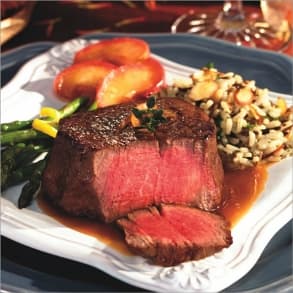
Steaks are still the workhorse of this category, the way a navy crewneck is the workhorse of a Lands' End book. The two reliable choices, in my experience, are Omaha Steaks for value and Snake River Farms for the special occasion. Omaha Steaks, founded in 1917 by the Simon family and operating mail order since 1952, remains privately owned and still mails the heavy holiday catalog every fall. They invented this category, and their Private Reserve line, dry-aged at least 28 days, is what I send to my brother in St. Charles every Christmas.
For something more ambitious, Snake River Farms in Boise specializes in American Wagyu, which is a cross between Japanese Wagyu and continental breeds. Consumer Reports' 2024 testing rated their Gold Grade filet at the top of the mail-order category. The marbling is genuinely something to see.
9. Veal
Veal has fallen out of fashion since the 1980s and the welfare conversation that came with it. The catalogs that still carry it tend to source from rose veal operations in Pennsylvania and Wisconsin, which raise the calves on pasture rather than in crates. D'Artagnan, founded by Ariane Daguin in 1985, is the name to know here, and they are happy to put a gift card in the box.
8. A serious hot dog
Do not send a supermarket hot dog through the mail. If you are going to do this, do it right, which means a smoked, casing-on dog from a butcher who treats the recipe seriously. Vienna Beef out of Chicago has been around since 1893 and ships a respectable mail-order box. Snake River Farms also makes a Wagyu hot dog that is, frankly, more dog than most people know what to do with.
7. Burgers
Burgers were a hard sell in the catalog world for a long time, because nobody could figure out why you would mail-order what you could grind at home. The argument that won, eventually, is that you are not buying ground beef, you are buying a recipe. Kansas City Steak Company sells a Steakburger from sirloin and ribeye trim that holds together on a hot grill the way a chuck patty does not. Pat LaFrieda, the New York butcher, also ships his Black Label blend by the half-dozen.
6. Lobster
Live lobster shipping is one of the small miracles of modern logistics. The lobster goes into the box in Maine in the morning and is on a doorstep in Phoenix the next afternoon, still kicking. LobsterAnywhere, out of South Hamilton, Massachusetts, has been at this since 1999 and remains the most consistently recommended of the live shippers. Maine Lobster Now is the other reliable name. Both ship tails and pre-cooked meat for those who would rather not face down a live crustacean.
5. Shrimp
Wild Gulf shrimp is one of those products that improves dramatically when you skip the supermarket middleman. Wild American Shrimp certified members ship direct from boats in Louisiana, Texas, and the Carolinas. The frozen-at-sea product is markedly sweeter than what you find in the freezer case at the chain grocer, and the price is not unreasonable when you compare apples to apples.
4. Spiral-sliced ham
The spiral-sliced ham solves the holiday dinner question for an entire household. Pittman & Davis, founded in Harlingen, Texas in 1926 and now part of Indrio Brands, still mails the catalog my grandmother received, and their spiral ham remains one of their best sellers. Honey Baked Ham ships nationwide too, though most folks pick those up at a local store. Burgers' Smokehouse in California, Missouri, a fourth-generation family operation, is the dark horse, particularly for a properly cured country ham.
3. Jerky
Jerky is the category that has changed the most since 2015. It used to be a gas station impulse buy. Now it is a craft product with provenance and small-batch flavors. New Braunfels Smokehouse in central Texas, family-owned by the Dunbar-Snyder line and celebrating its 80th anniversary in September 2025 according to local Community Impact coverage, ships a peppered pork jerky that ought to embarrass the convenience-store version. Country Archer and People's Choice Beef Jerky are the two newer names that have earned shelf space alongside the old guard.
2. Ribs
Pre-smoked, vacuum-sealed ribs are the gift for the recipient who loves barbecue but does not own a smoker. Burgers' Smokehouse ships a hickory-smoked St. Louis-cut rib that you finish on a hot grill in twenty minutes. Snake River Farms sells an American Wagyu beef short rib that is, in my opinion, one of the more impressive things you can put in a gift box right now.
1. Crab
Crab keeps its top spot for the same reason it earned it years ago: it is regional, perishable, and a genuine treat for someone who does not live near a coast. Maryland blue crabs from Cameron's Seafood and Alaskan king crab legs from Pure Alaska Salmon or Holy Grail Steak Co. are the two paths to take. Crab cakes from a Baltimore institution like Faidley's are a third route, for the recipient who would rather not pick through shells.
How to send a meat gift without a disaster
A few practical things I have learned from forty years of writing catalog copy for products that arrive cold:
- Confirm the delivery date with the recipient. A box of dry-iced ribeyes on a porch in August is no kind of present. Most reputable shippers will hold to a date if you ask.
- Avoid Monday and Friday deliveries. Tuesday through Thursday is the sweet spot for FedEx and UPS perishable handling.
- For an older recipient, consider a half portion. A six-piece filet box overwhelms a household of two. Most of these companies sell smaller assortments and will not push back if you ask.
- Mind the freezer space. If you are sending to a friend with a small kitchen, ask first. There is no graceful way to receive a sixteen-pound brisket when you have a single freezer drawer.
The mail-order meat business turned out, against my expectations in 1978, to be the most enduring part of the gourmet catalog world. The brands have outlasted nearly every fashion house and home goods catalog I worked with, and there is something fitting about that. A good piece of meat, properly shipped and properly cooked, is one of the small civilized pleasures that has not lost its meaning across forty years of changing tastes. Send one to someone you like. They will remember the box long after they have forgotten the gift card you sent the year before.