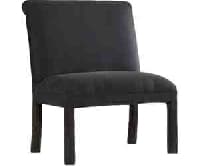
I spent fifteen years staging homes around Atlanta, and in all that time the question I heard most often from clients was a quiet one, usually asked at the end of a walk-through, sometimes in a hallway out of earshot of the rest of the family. Will my husband actually fit on that sofa? Or, just as often, where am I supposed to put a chair my dad won't be embarrassed to sit in? Those are the questions a showroom won't answer for you, so let's talk about them here, friend to friend.
Plus size furniture used to mean a recliner the color of dried leaves and not much else. That has changed, thank goodness. Today there are sofas, beds, dining chairs, and outdoor pieces designed for bigger bodies that don't look like they belong in a doctor's waiting room. The trick is knowing where to look and what questions to ask before you swipe the card.
Why It Matters More Than People Admit
Furniture that doesn't fit isn't just a comfort issue. A chair with a too-narrow seat presses on the hips and the lower back. A standard mattress that bottoms out under weight will leave you sore by morning. A dining chair that creaks every time someone sits down stops being funny somewhere around the third Thanksgiving, and by then it has stolen a little dignity from the person sitting in it. I have watched grown adults choose to stand at parties because they didn't trust the seating. That is not a small thing.
So when I tell clients to think about plus size pieces, I don't mean as a sad concession. I mean as the same exercise we do with paint colors and rug pads, which is to say, with intention. The right piece in the right spot makes the whole room feel hospitable.
What to Actually Ask Before You Buy
Whether you are shopping at a national chain, a catalog, or a small upholsterer, the questions are the same. Pull out your phone and write these down before you walk in.
- What is the weight rating? A reputable manufacturer will tell you this without flinching. If a salesperson dodges, that is your answer.
- What is the seat width and depth? Standard seat width on a dining chair runs about 17 to 18 inches. For a bigger body you want 20 to 24, sometimes more.
- What is the frame made of? Look for kiln-dried hardwood or a reinforced steel frame. Particle board and stapled corners are how a sofa develops a sad slump after eighteen months.
- How is the seating supported? Eight-way hand-tied springs are the gold standard. Sinuous spring is a workable second. A web of elastic straps is not going to hold up.
- What is the warranty on the frame? A lifetime frame warranty tells you the company believes in what they built.
I keep a little index card with these in my purse. Old habit from staging days, and it has saved more than one client from a return-shipping headache.
Where to Look in 2026
The catalog category has shifted some since the early 2010s. The big name many of you remember is LivingXL, which has been around for years and is still operating as a brand under Destination XL Group, the parent company of DXL. They sell oversized chairs, including a model rated to 1,000 pounds, along with bath benches, garden seating, and travel pieces aimed at bigger bodies. As of early 2026, DXL announced plans to combine with FullBeauty Brands, which would put LivingXL under the same roof as Brylane Home and other plus-size lifestyle catalogs. Worth keeping an eye on, because mergers usually mean shuffled selections.
Beyond the dedicated plus-size catalogs, there are a handful of mainstream brands that quietly do this category well.
- Bassett offers a custom big and tall program with seats sized up an inch or two and frames built to take the load. I have specified them for clients and the workmanship is the real thing.
- Lovesac Sactionals get high marks from plus-size reviewers because the modular design lets you build a piece around your body rather than the other way around. The lifetime guarantee on the hard pieces is a nice touch.
- Flexsteel has been making sofas with steel-coil seating for decades. It's the kind of furniture your grandmother would have called serious.
- Modway sells some sectionals rated north of 1,300 pounds total weight capacity, which gives you room for two larger bodies plus a grandchild and the dog.
- For recliners specifically, look at the 500-pound-rated models from companies like Lane and Irene House, or the heavy-duty wall-saver styles. They aren't the prettiest pieces in the catalog, but a slipcover in a good neutral can do wonders.
The Bedroom Deserves the Most Thought
If you are going to splurge on one piece of plus size furniture, make it the mattress and box spring. We spend a third of our lives in bed, and a sagging mattress is the fastest route to a bad back, sore hips, and grumpy mornings. Look for a mattress with at least a ten-year warranty that specifies no sagging beyond an inch. Pair it with a heavy-duty platform frame or a steel bed frame with a center support leg, sometimes two. Skip the standard four-leg metal frame from the discount store. They were never built for serious weight and they will let you know.
For pillows, a denser fill holds shape better through the night. Down or down-alternative in a high fill power, or a contoured memory foam, both work well.
Don't Forget the Outdoor Pieces
Patio season in the South is most of the year, and the lawn chair aisle is a minefield. Aluminum frames marketed as outdoor seating often top out at 250 pounds. For a bigger body, look for commercial-grade outdoor furniture rated to 400 pounds or more. Polywood Adirondacks, certain teak loungers, and the heavy-duty zero-gravity recliners hold up better than the folding nylon kind. A good outdoor cushion in a Sunbrella fabric will outlast three of the cheap ones, and your back will thank you.
A Word on Style
Here is the part I want to leave you with. There is no rule that says plus size furniture has to look like it came from a hospital catalog. A custom big and tall sofa can wear a beautiful linen slipcover. An oversized armchair can be reupholstered in a Schumacher print or a soft Sherwin-Williams Tricorn Black velvet. The recliner, if you must, can live behind a side table with a good lamp on it so the eye lands on the lamp first. Staging is mostly about where the eye goes.
You deserve a home that fits you, not the other way around. Spend a little more on the pieces you sit on, ask the questions, and don't apologize to a salesperson for needing what you need. The right chair will make your living room feel like an invitation. Isn't that the whole point?