
Every year on the second Sunday of May, my daughter Allison drives down from the Twin Cities with the grandkids and a bouquet she picks up at a farm stand somewhere along I-35. Last year she brought peonies the size of saucers, and we sat on the porch with iced tea and watched my granddaughter Lily try to teach the dog a trick. It's become one of those small Iowa traditions you don't think about until somebody asks you where it came from.
Which got me wondering, honestly. Where did Mother's Day come from? Who decided on the second Sunday of May? And why does it feel, at least at the grocery store, like the holiday is mostly about chocolates and a card display by the front register? In 2026 it falls on Sunday, May 10, and before it gets here I thought I'd sit down and write what I learned. The real story is more interesting and a little sadder than I expected.
The very old roots
People have been honoring mothers for a very long time. The ancient Greeks held spring festivals for Rhea, the mother of the gods, and the Romans had a similar springtime celebration for Cybele. I remember teaching a unit on ancient civilizations to my fifth graders years ago, and the children were always tickled to learn that something as familiar as a holiday for moms had roots that old.
In Christian Europe, particularly in the United Kingdom, there was a tradition called Mothering Sunday, observed on the fourth Sunday of Lent. Families returned to their mother church, the main church in the area where they were baptized, and over the centuries the day softened into a homecoming for mothers as well. Children away in service would be given the day off to walk back home, often picking wildflowers along the way to bring to their mothers. Doesn't that sound lovely?
Mothering Sunday is still observed in the U.K. in March or early April. The two holidays look similar from a distance but came up through different histories.
Ann Reeves Jarvis and her quiet work
The American story begins in West Virginia before the Civil War. A young woman named Ann Reeves Jarvis noticed that an awful lot of babies in her Appalachian community were dying of preventable illnesses. So she started something she called Mothers' Day Work Clubs, where local women learned about clean drinking water, sanitation, and how to care for sick children. This was in 1858, and she was pregnant with her sixth child at the time. As a former teacher and a grandmother myself, I find that detail astonishing.
During the Civil War she kept her clubs going and even nursed soldiers from both sides. After the war she organized Mothers' Friendship Day picnics, designed to help heal the rift between Union and Confederate families. She believed motherhood was a public good, not just a private love.
Anna Jarvis and the founding of the holiday
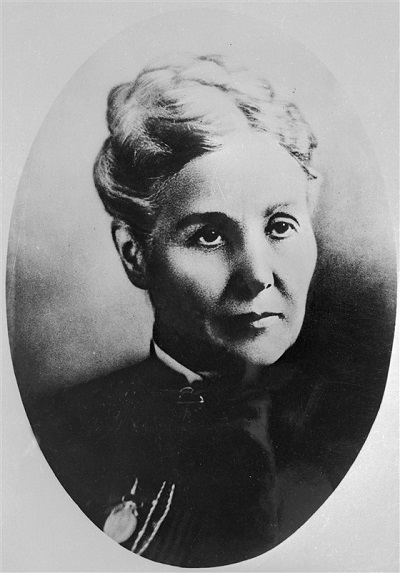
Ann Reeves Jarvis passed away in 1905. Her grown daughter, Anna Jarvis, was so heartbroken that she resolved to create a national holiday in her mother's honor. Anna never married and never had children of her own. She poured herself instead into this one project for the rest of her life.
On May 10, 1908, three years to the day after her mother's death, Anna organized the very first Mother's Day service at Andrews Methodist Episcopal Church in Grafton, West Virginia, the church where her mother had taught Sunday school. That same Sunday, a much larger event was held at one of John Wanamaker's department stores in Philadelphia, the businessman who had agreed to back her financially. Thousands attended. Anna handed out white carnations, her mother's favorite flower, as a quiet symbol of a mother's love.
From there, Anna campaigned tirelessly. She wrote letters to governors, ministers, and newspaper editors. By 1912 several states had adopted the holiday, and on May 9, 1914, President Woodrow Wilson signed a proclamation making the second Sunday in May an official national observance. The Andrews church in Grafton was later designated the International Mother's Day Shrine, and as of early 2026 it's still open to visitors.
The part that surprised me
Here's the part of the story I didn't know. Within a decade of that first 1908 service, Anna Jarvis came to deeply regret what Mother's Day had become. She watched florists triple the price of carnations every May. She watched greeting card companies print sentiments by the millions. She watched candy makers tie chocolate boxes to the holiday. To her, all of it cheapened the simple, personal day of remembrance she had wanted for her own mother.
She fought it openly. In 1923 she crashed a confectioners' convention to protest. In 1925 she was arrested for disturbing the peace at a Philadelphia event where the American War Mothers were selling carnations. By the 1940s she was actively campaigning to have Mother's Day removed from the national calendar. She spent her last years in a sanitarium in West Chester, Pennsylvania, and died in 1948, never having married, never having become a mother in the literal sense, and quite poor.
Isn't it a strange and tender thing, to give the country a holiday and then spend your life fighting the way the country celebrated it?
What it looks like in 2026
Today the National Retail Federation puts out an estimate every spring of how much Americans will spend on Mother's Day, and the number always lands somewhere north of $30 billion. Cards, flowers, brunch reservations, jewelry. The second Sunday in May is now one of the busiest restaurant days of the year. Mother's Day is observed in more than 100 countries, mostly on that same May date, although a handful of nations stay on the older European Mothering Sunday calendar.
I don't begrudge any of the spending. Bill and I have both been on the giving and receiving end of bouquets, and there's nothing wrong with sending pears or carnations to your own mother if that's what brings her joy. But I think Anna Jarvis might have appreciated knowing that the most meaningful thing you can do, the thing she actually wanted from us, costs almost nothing.
A few small ideas in keeping with the original spirit
- Write a real letter. Not a card you signed, an actual handwritten letter. A page or two. My own mother kept every single one I ever wrote her, and I found them in a shoebox after she passed.
- Drive over and visit, if you can. A phone call is good. Sitting at the kitchen table is better.
- Wear or send a white carnation in memory of a mother who has passed, and a colored carnation for one still with us. That was Anna Jarvis's original tradition, and it's a quiet, dignified one.
- Tell a story about her to your own children or grandchildren. Mine love hearing about my mother's pickled-watermelon-rind recipe and the time she sewed all four of our Easter dresses in a single weekend.
- Do something useful in her name. A donation to the local food pantry, an afternoon volunteering, a casserole brought to a young mother on your block. Ann Reeves Jarvis would recognize that better than any greeting card.
One last thought
I think what Anna Jarvis ultimately wanted was for each of us to remember our mother, the specific one, with her particular gestures and her particular kitchen smells, and not just the generic idea of motherhood printed on a card. Whoever raised you, whoever stood in for the role, whoever you are mothering now, that's the person worth honoring on May 10 this year.
What's a small Mother's Day tradition your family keeps?