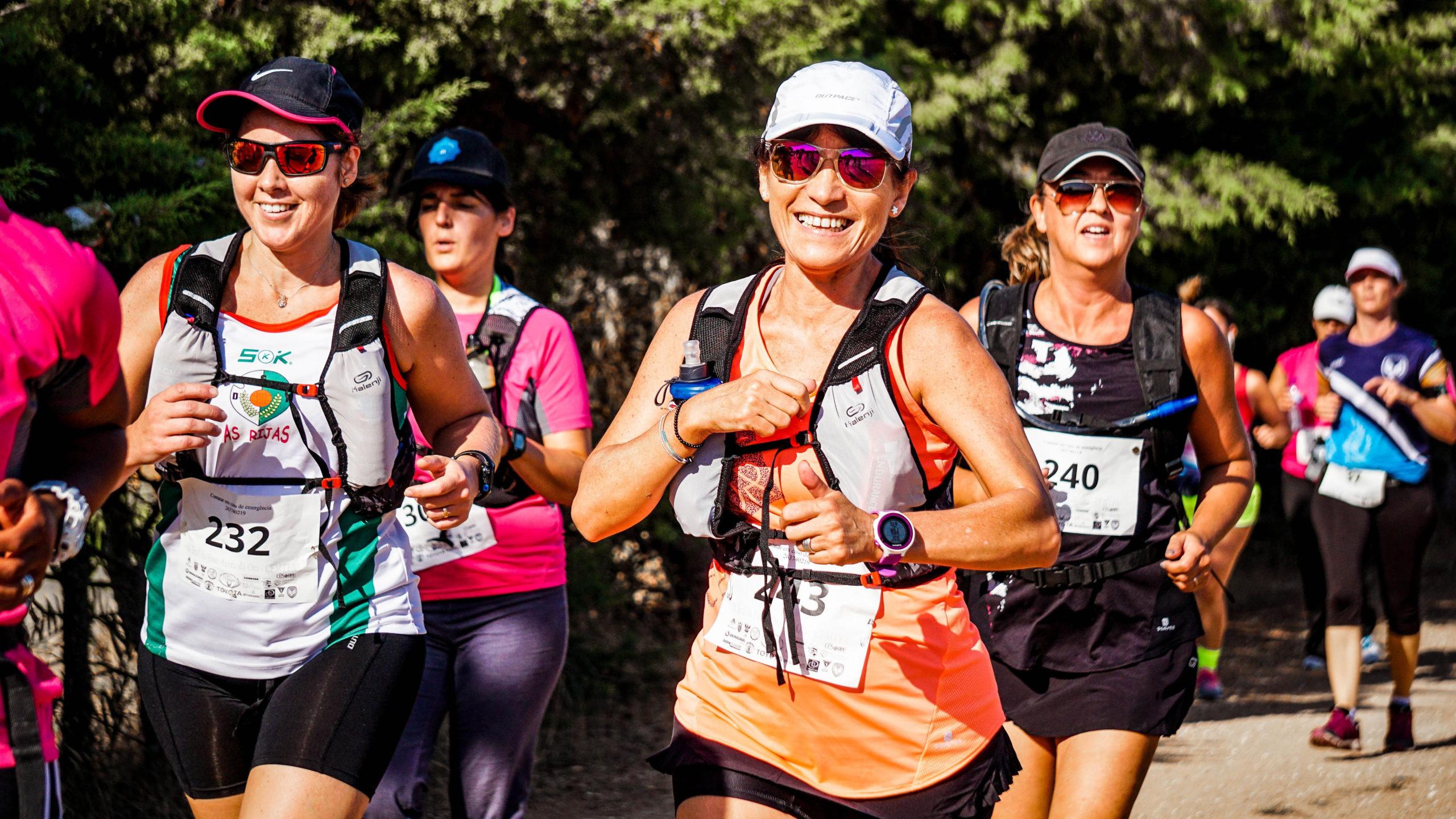
I am 78 years old, I live in Sun City West, and the only running I do these days is the slow shuffle to the mailbox before the asphalt hits 110 degrees. But for thirty-five years at Bechtel I worked alongside engineers who ran. Some of them still do. And the question that gets asked at the bridge table on Tuesday afternoons, more than it should, is the same one this article was written to answer in 2012: how do you actually get faster.
The honest answer involves three things: a sensible goal, a small number of stresses applied repeatedly, and enough recovery to absorb them. The original article from this site listed seven tips. Most of them are still correct. A couple need updating, because the research has moved and so has the typical reader of a Catalogs.com article, who is closer to my age than to a college cross-country runner. So here is the rewrite, with the numbers checked.
1. Set a goal you can defend on paper
The four-minute mile is a useful headline and a terrible target. Roger Bannister broke it in 1954, on cinders, in flat shoes, at age 25. You and I are not going there. The relevant figure for an older runner is something Coach Joe Friel and others have written about for years: after age 40, runners lose roughly one percent of their pace per year, and the rate steepens to two or three percent per year past 70. That is not a sentence, it is a planning constraint.
Pick a goal you can write down. Twenty seconds off your current mile in eight weeks. A non-stop 5K by the end of the quarter. A pace you can hold for thirty minutes without your watch beeping at you about heart rate. Specificity matters more than ambition.
2. Change your mind about what hard means
The original article said that if your workout feels easy, you aren't challenging yourself enough. I would put it differently. Most of your running should feel easy. The mistake I see people my age make is running every workout at the same medium-hard effort, getting tired, and getting no faster. Coaches call it the gray zone. It is the runner's equivalent of mowing the lawn at half-throttle: noisy, slow, and bad for the engine.
The fix is to make easy days easier and hard days harder. Two flavors of run, clearly distinguished. Your body adapts to specific stress, not to a general blur of effort.
3. Fartleks: yes, but read the label
Fartlek is Swedish for speed play, and it has been in distance-running playbooks since Gosta Holmer popularized it in the 1930s. The concept is sound. Pick up the pace for a stretch, drop it back, repeat. No track required. No stopwatch required. You can do it on the path around a retention pond if that is what you have.
A reasonable structure for someone 60 or older: after a ten-minute warmup, run one minute at a perceived effort of seven out of ten, then walk or jog easy for two minutes. Repeat five or six times. Cool down. Two of these a week is plenty. The 21-minute hard-1-easy-2 block from the original article is fine for a fit 40-year-old; for the rest of us, build up to it.
4. Step rate matters, but 180 is not a magic number
This is the tip that has aged the worst since 2012, and it deserves a correction. The old advice, traceable to coach Jack Daniels watching the 1984 Olympics, was that all good runners take 180 or more steps per minute, so you should too. A pile of more recent work, including a 2024 systematic review on cadence and biomechanics, says it is not that simple. Recreational runners cluster between 150 and 170 steps per minute. Elites hit 180-plus largely because they are moving fast, not because the number itself is sacred.
The defensible takeaway: count your current cadence over a one-minute stretch on a comfortable run, then aim to raise it by five to ten percent. Shorter, quicker steps reduce overstride, reduce peak impact at the knee, and tend to feel smoother once you adjust. They do not have to add up to 180.
5. Hills, in moderation
Hill repeats are the closest thing to free money in running. They build leg strength, they raise your aerobic ceiling, and the upward direction limits the impact on knees and hips compared with sprinting on the flats. For an older runner that last point is the whole game.
If you have a hill, find a grade you can run up for 30 seconds without falling apart, walk down, and repeat four to six times. Once a week. If you do not have a hill, a treadmill at four or five percent grade does the job. Sun City West does not offer much terrain, so the treadmill is what most of my neighbors use.
6. Cross-train, especially for strength
This is the section I would expand if I were writing the original article today. Sarcopenia, the age-related loss of muscle mass, runs about three to eight percent per decade after 30, and it accelerates after 60. You cannot outrun it. You have to lift against it.
Two short strength sessions a week, with the basics: squats or sit-to-stands, a hip hinge of some kind, a push, a pull, and a calf raise. Add in a little plyometric work if your joints will tolerate it: small jumps, skipping, side hops. The point is not to build a physique. The point is to keep the elastic snap in your tendons, which is what makes the difference between an efficient stride and a tired one.
7. The gear question, answered honestly
A new pair of shoes will not make you faster. A pair of shoes that fits, replaced every 300 to 500 miles, will keep you uninjured, which is the next best thing. For a runner past 60, I would budget for one good pair of trainers, replaced when the midsole feels dead, and resist the marketing pressure to own four pairs in rotation.
If you want to browse, Catalogs.com lists free catalogs from the relevant brands. The ones a methodical shopper might compare:
- Nike running shoes and apparel
- Brooks Running, well regarded for stable trainers
- On Running, the Swiss brand with the segmented sole
- Lululemon for technical apparel
- Champion for plain, durable basics
- ProForm for treadmills and home equipment
- Total Gym for low-impact strength work
The bottom line for a reader past 60
Three things matter, in this order. First, run easy most of the time and hard once or twice a week, with the two clearly separated. Second, lift weights, because you will lose strength faster than you lose aerobic fitness, and strength is what lets you keep running at all. Third, sleep. Recovery is where the adaptation actually happens, and at our age it takes longer than it used to. A 48-year-old can hammer two hard days back to back. A 68-year-old probably should not.
Run the experiment on yourself. Keep a simple log: date, distance, perceived effort one to ten, how you felt the next morning. After eight weeks the pattern will tell you what works. That is the engineer's answer, and as far as I can tell it is also the right one.