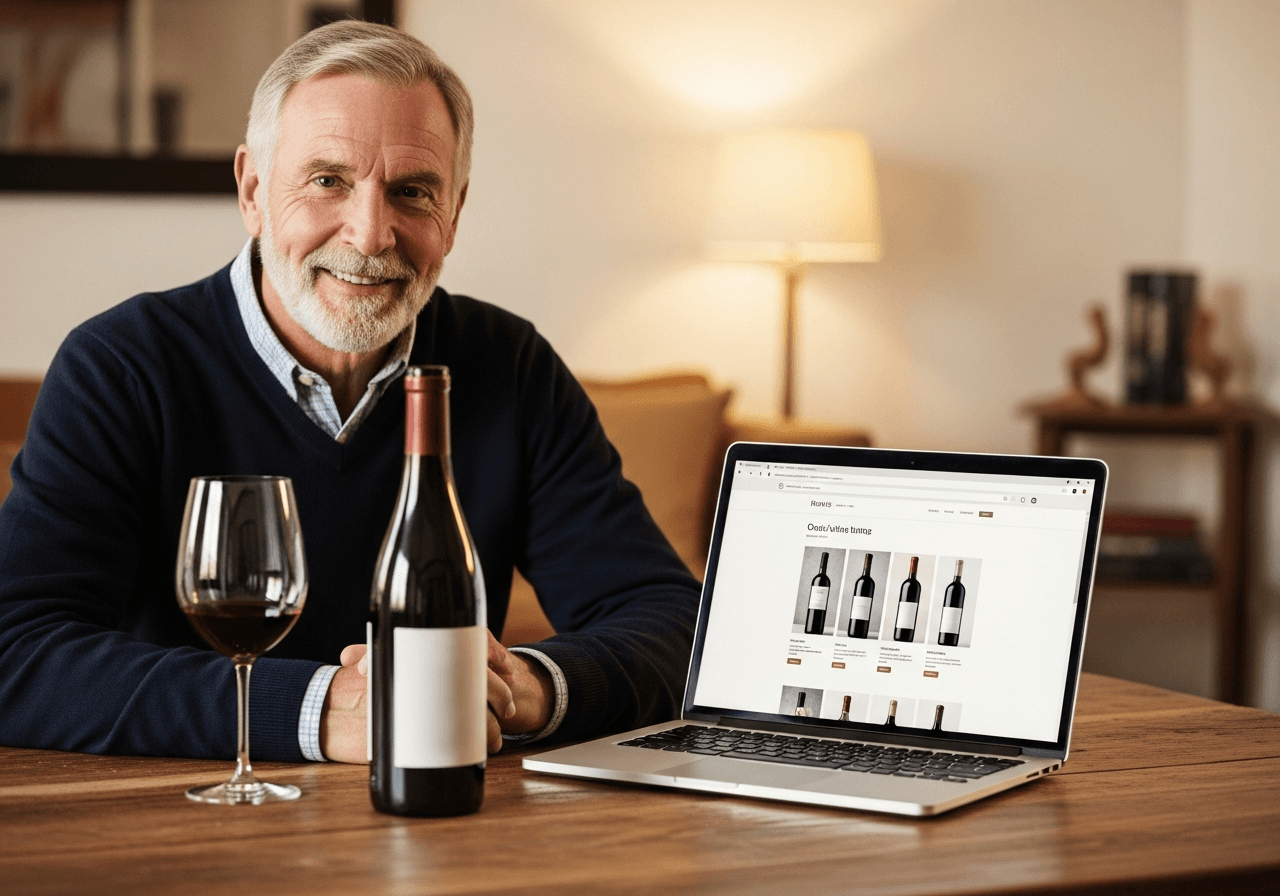
I spent thirty-odd years driving a station wagon full of sample cases from a warehouse in New Jersey to wine shops up and down the Eastern Seaboard. Knocking on doors, pouring Cotes du Rhone for a buyer who had ten minutes, then back in the car. So when Susan first asked me, sometime around 2014, why I didn't just order our weeknight wine online, I'll admit I bristled. Felt like skipping the part of the trade I'd loved. Now I'm 71, the barn outside Sonoma has a small cellar tucked under the stairs, and most of what's in it arrived by FedEx. The world changed, and on this one, the change was mostly for the better.
If you're a reader of a certain age who still drives to the same shop you've used for twenty years, I won't talk you out of it. There's real value in a shopkeeper who knows your palate. But there are good reasons to order online too, and a few moments where it's clearly the right move. Here's how I think about the question now.
When the law actually lets you
This is the first thing to settle, and it has shifted a fair bit recently. As of 2025, direct-to-consumer wine shipping is permitted in 48 states and Washington, D.C. Mississippi opened up in July 2025; Arkansas and Delaware updated their statutes the same year. Only Utah and Delaware remain effectively closed for full DTC, and Rhode Island still wants you to have walked into the winery first.
The wrinkle is dry counties. Arkansas has more than 50 dry or partially dry counties where no shipment can land, regardless of what the state allows. Alaska, Kentucky, and Mississippi all have similar carve-outs. If your address is in one of those zones, a checkout page will usually tell you at the ZIP code, but not always. If a delivery gets refused, the wine often can't be returned to the seller across state lines and the producer eats it. So check your county, not just your state.
When you want something your local shop won't carry
This is where online buying earns its keep. A good independent shop in a mid-sized town might stock 800 to 1,500 SKUs. A regional retailer with a strong DTC arm will list 10,000 or more, and a producer's own website will sell you bottles that never reach a distributor at all. If you're looking for a small Loire vigneron, a Friulian skin-contact bottling that has come and gone in fashion, or last week's release from a Sonoma producer with a 600-case allocation, you're going to find it online or not at all.
I bought a case of a producer's Vacqueyras two years ago that I first tasted in his cellar in 1987. There's no shop in Sonoma County that carries him. The website had three vintages and shipped it in a styrofoam mailer in October when the trucks aren't running through 95-degree weather. That trip would have been a phone call and a prayer twenty years ago.
When the math works in your favor
Online wine can be cheaper than the same bottle on a shelf, sometimes meaningfully so. The bigger lever, though, is the case discount. Most online sellers shave 10 to 15 percent off when you buy twelve bottles, mixed or straight, and shipping per bottle drops sharply at a case. A $14 Cotes du Rhone that runs $168 a case before tax with free shipping is hard to beat, and on a weeknight pasta night it pours every bit as well as something three times the price.
A few things to keep in mind on cost:
- Shipping in summer often runs higher because the better retailers use a temperature-controlled service or hold orders until the weather breaks. Pay it. A pour that has been cooked in a truck for two days is a waste at any price.
- Sales tax applies to your destination state, not the seller's. Most retailers calculate it at checkout. Don't be surprised when a Napa producer charges you New York tax.
- Membership clubs (Wine.com's Stewardship program, Naked Wines, Firstleaf, and so on) can pay for themselves if you order regularly, but read the cancellation terms. Some auto-ship a case a month unless you opt out.
When you want to learn without anyone watching
I've stood behind enough counters in my time to know that walking into a shop and asking, "What's a good Burgundy for under $40?" feels exposing for a lot of people. Online, you can read tasting notes, look at a producer's site, cross-reference Wine-Searcher or Vivino for community scores, and put together an order at your kitchen table with a cup of coffee. No one is hovering, no one is steering you to the bottle with the best margin.
The risk of online learning is the opposite one: you can over-rely on scores. A 92-point bottle from one critic is a different wine than a 92 from another, and points say nothing about whether the wine suits a Tuesday meatloaf. Read the writeup, not just the number. Better yet, find two or three critics whose taste matches your own and lean on them.
When NOT to buy online
A few cases where I still drive to the shop:
- Single bottles for tonight. Shipping a single bottle costs nearly as much as a case in many states. Pick up at the shop.
- Hot weather, urgent need. Even with cold-pack shipping, July and August are tough on wine in transit. The good retailers will hold your order until conditions improve, which is the right call but means you wait.
- A producer you've never tried. One bottle at the shop, then a case online if you like it. A case of something untested can be a long six months.
A few practical notes for the 60-plus reader
Wine deliveries require an adult signature at the door, typically 21 or older. If you're traveling, ask a neighbor to take it in, or have it held at a FedEx or UPS pickup point. Don't let a case sit on a porch in the sun. Most reputable sellers will reroute on request without a fee.
If something arrives leaking, corked, or obviously cooked, photograph it and email the seller the same day. The good ones will replace or refund without a fuss. The less good ones won't, and that's how you build your list of where to shop next time.
One last thing. The pandemic-era alcohol delivery boom has cooled. Drizly, which Uber bought for $1.1 billion in 2021, was shuttered in March 2024. The retailers and producers shipping their own wine are still here, doing it well, and in many ways doing it better than the gig-economy apps did. The trade has settled back into the hands of people who actually care about the bottle. That's the part that gives me confidence to keep ordering.
Find a producer whose work you trust. Order a case in the cool months. Drink it on Tuesdays with whatever you're cooking. That's the whole game.