I was wiping down the bar one night back in maybe 2012 when a kid asked me if we had anything from a real independent brewery. Bruno was still a pup then, sleeping under the cooler. I pointed at the Yards tap and said, sure, that one's a few neighborhoods over. He nodded like I'd passed a test. That was the language back then. Independent meant the owner could probably walk into the place and you'd know it was him by the boots.
Thirteen years on, the word has gotten complicated. So has the list. I sold McGinty's in 2018, and since then I've watched a fair number of the names I used to stock either get bought, fold, or quietly change hands twice. If you're shopping a six-pack and want to support a brewery that's actually still independent in 2026, the label alone won't tell you. Let me walk through where things stand.
The Brewers Association definition, and why it matters
The Brewers Association in Boulder still keeps the working definition: small (under six million barrels a year), independent (less than 25 percent owned by a non-craft alcohol producer), and brewing traditionally. They put a little independent seal on cans that qualify. Not every small brewery uses the seal, but if you see it, that's the cleanest signal you'll get at the cooler door.
The trade group also publishes a top-50 list every spring. The 2025 numbers came out and they tell you most of what you need to know about the craft scene right now. Yuengling is still number one, Sierra Nevada moved up to number two, and Boston Beer (Sam Adams) slipped to three. Total craft production was 21.86 million barrels in 2025, down about five percent from the year before. More breweries closed than opened, second year in a row. The boom is over. What's left is the people who like the work.
Names from the old lists, where they ended up
Some of you remember the lineup that used to run on every "top ten independent breweries" piece. Most of those names are still around in some form. A few aren't. Quick rundown, since I get asked.
- New Belgium (Fort Collins, makers of Fat Tire) was acquired by Lion, which is owned by Japan's Kirin, back in 2019. They still brew good beer. They are no longer independent under any sensible definition.
- Magic Hat (South Burlington) and Pyramid (Seattle) both ended up under North American Breweries, which itself went to FIFCO out of Costa Rica years back. Magic Hat shut its Vermont brewery in 2024. Number 9 still exists as a brand, but it's contract-brewed elsewhere.
- Rogue Ales (Newport, Oregon) closed the brewery in November 2025 and parent Oregon Brewing filed Chapter 7. That one stung. They made a chocolate stout I poured for years.
- BridgePort Brewing (Portland) closed back in 2019. The brand has been quiet since.
- Three Creeks Brewing (Sisters, Oregon) shut its production facility in 2024. The brewpub got sold.
- Boulevard Brewing (Kansas City) was sold to Belgian family-owned Duvel Moortgat in 2013. Privately held, family company, but not technically Brewers-Association-independent.
- Harpoon (Boston) is one of the holdouts: employee-owned through an ESOP since 2014, still independent. They've joined a ready-to-drink cocktail venture with Saranac and Flying Dog, which is the kind of move you make to keep the lights on.
- F.X. Matt / Saranac (Utica, New York) is still family-owned, fifth generation now. They bought Flying Dog in 2024 and they're growing while a lot of others shrink. Worth a look if you're in the Northeast.
- Silver Moon Brewing (Bend, Oregon) is still going under its current ownership. Smaller now but still pouring.
What independent looks like in 2026
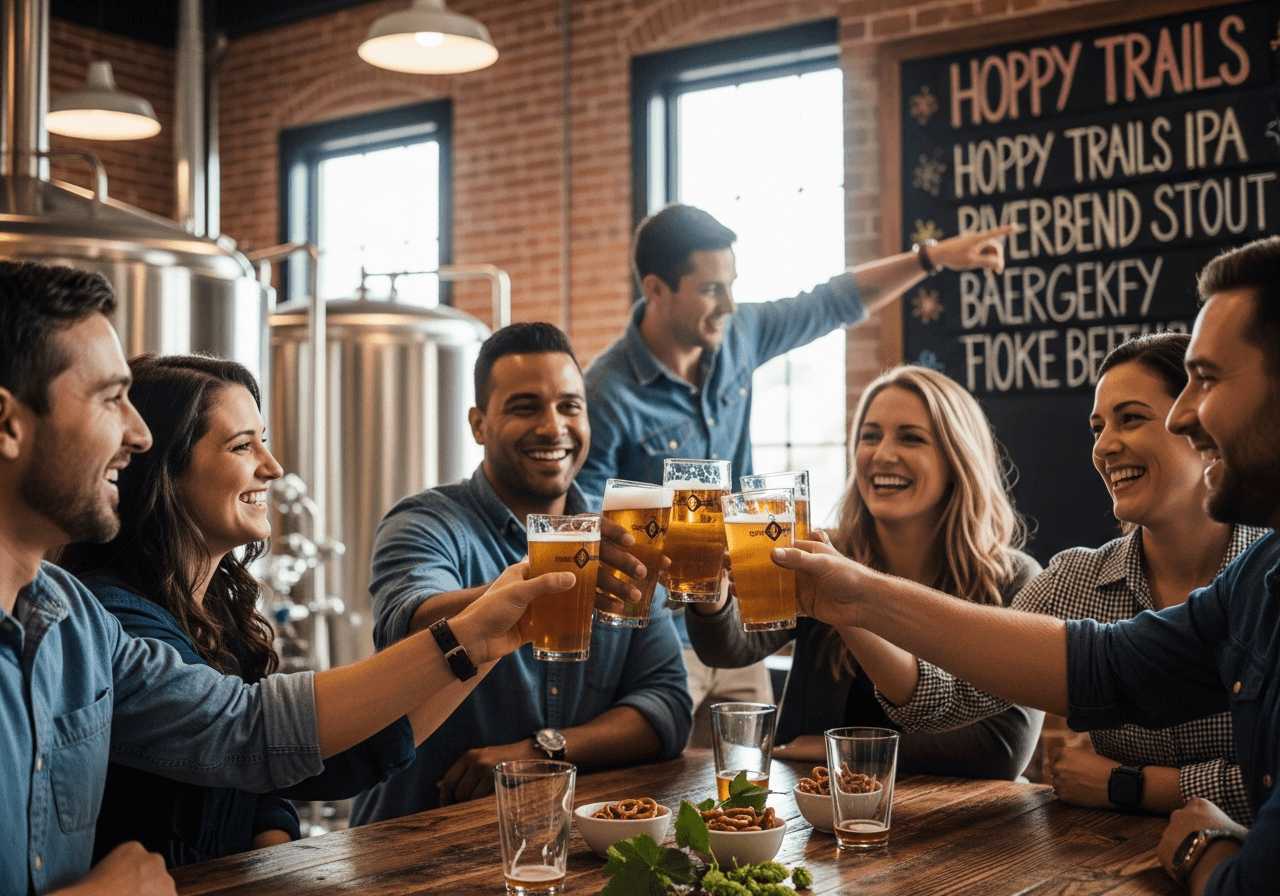
The real independent shelf isn't the legacy names anymore. It's the brewery six miles from your house that does maybe 1,500 barrels a year and sells most of it through the taproom. Around Philly that means places like Yards, Forest & Main out in Ambler, Tired Hands, Human Robot, Evil Genius. None of them are getting rich. All of them make beer worth drinking. The pattern repeats in every city. Find your local. Drink there.
If you want a national name that you can still pick up at the supermarket and that the Brewers Association will tell you is genuinely independent, here's the short list I'd put my money on: Sierra Nevada (still family-owned, second largest craft brewer in the country), Bell's in Michigan (technically owned by Kirin-Lion now, so scratch that one too actually), Stone (sold to Sapporo in 2022, scratch), Founders (Mahou San Miguel owns the majority, scratch), Deschutes in Bend (still independent, employee-owned), Allagash in Portland Maine (independent), Bell's competitor Short's (independent, Michigan), Russian River (Pliny the Elder, still independent), and Lagunitas (Heineken, scratch).
You see the pattern. Every couple of years the big global drinks companies pick off another one. Read the label, but more importantly look up who owns the brand. Wikipedia tells you in two clicks. The Brewers Association keeps a list.
Why I still care about this
I'm not going to preach. People drink what they want and most of the buy-outs haven't ruined the beer in the can, at least not right away. Goose Island makes a perfectly fine ale and AB has owned them since 2011. The beer didn't change overnight. What changes is the money flow. When you buy a Fat Tire, the profit goes back to Kirin in Tokyo. When you buy a Yards Brawler at the corner store in Fishtown, the money mostly stays in Philadelphia, pays a few brewers, keeps a lease current.
That's the only argument I've ever made for drinking small and local. It's not better tasting by definition. Plenty of macro lager is technically immaculate. But the small place is the one that hires your kid when he gets out of college and isn't sure what he wants to do, and the small place is the one that lets the senior center use the back room for the bingo when the parish hall has a leak. Worth a few extra bucks a six-pack to me.
One practical takeaway
If you're sixty-plus and ordering for a holiday or a party, you don't need to chase the trend. Pick one good local pale ale, one local lager or pilsner, and one stout or porter for the people who want something darker. Three styles covers everybody. Get them all from one small brewery if you can. Call ahead, see if they do six-pack mix-and-match at the taproom. Most of them do. Tell the kid behind the counter what you're after and they'll set you up better than any list will.
Bruno's on the porch in the sun as I'm writing this. He doesn't drink anymore. Vet says he shouldn't. Same advice applies to most of us at our age, more or less. One good beer with dinner, from somebody who's still in the game. That's plenty.