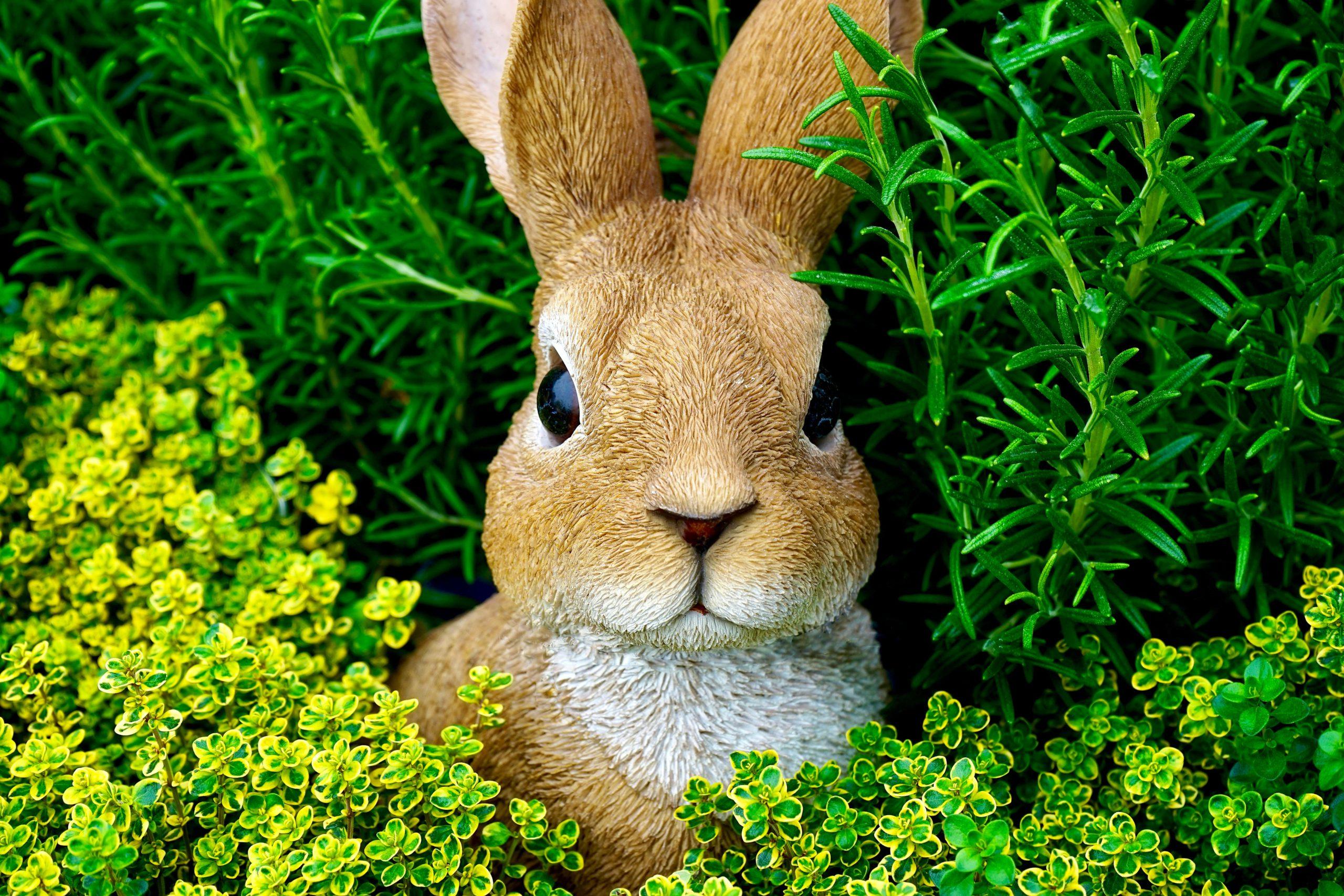
I remember when my daughter Allison was about four years old, she asked me, very seriously over a bowl of Cheerios, why a rabbit brings the eggs at Easter and not a hen. It seemed like such a sensible question that I had to admit I didn't have a tidy answer. I told her I would look it up at the library after school, and that little promise sent me down a rabbit hole, if you'll forgive the pun, that I've been wandering through ever since. Every spring around this time, when the crocuses finally push through the last of the Iowa snow, I think back to that question and how much there is to tell.
So if you've ever stood in the candy aisle at Hy-Vee staring at a chocolate bunny and wondered the same thing Allison did, settle in for a few minutes. The story is older and stranger than most of us were taught.
Springtime, Long Before Anyone Said "Easter"
Easter, of course, is a Christian holiday. It marks the Resurrection of Jesus Christ, the day the New Testament tells us he rose from the grave three days after the crucifixion. For most of the families I know, that's the heart of the morning, and the baskets and bunnies are the sweetness around the edges.
But the springtime celebration itself is much older than the church. Long before Christianity reached northern Europe, the people there were already throwing festivals to mark the end of winter. You can hardly blame them. After months of dark afternoons and frozen ground, the first warm day must have felt like a small miracle. Living through Iowa winters, I do understand the impulse.
The most often-told piece of this story involves a goddess named Eostre, sometimes spelled Ostara. According to the Venerable Bede, an English monk writing in the early 700s, the Anglo-Saxons had a goddess by that name and a month called Eosturmonath, roughly our April. From what historians can tell, that's about all the firm evidence we have of her. A great deal of what people repeat about Eostre, including the popular story that she once turned a frozen bird into a hare, was actually written down in the 1800s rather than handed down from the ancients. It's a charming tale, but it isn't quite as old as it sounds.
Still, the connection between spring, eggs, and rabbits is genuine and easy enough to understand. Hens start laying again as the days lengthen. Rabbits and hares are notorious for their early spring litters; my husband Don, who grew up on a farm outside Cedar Rapids, can confirm there's nothing subtle about a hare population in March. Eggs and baby animals were simply what spring looked like, and our ancestors built their celebrations around what they could see in the fields.
Where the Easter Hare Actually Comes From
The Easter Bunny we know, with his basket and his colored eggs, has a more traceable history, and it begins in Germany. The earliest written reference scholars have found is from 1682, in a little essay called De ovis paschalibus, or "About Easter Eggs," by a physician named Georg Franck von Franckenau in southwestern Germany. He described an old folk custom in which an Easter hare, the Osterhase, hid colored eggs in the garden for children to find.
I love that detail because it suggests the tradition was already old by the time anyone bothered to write it down. The good doctor wasn't introducing a new idea. He was describing something the local children already knew.
From there the custom spread, partly through the 1800s wave of pretty illustrated greeting cards, picture books, and chocolate molds. By that time, the egg-laying hare had become a fully formed character, beloved across German-speaking Europe.
How the Tradition Crossed the Atlantic
Here is where my Pennsylvania-born neighbors love to chime in. The Easter Bunny came to America with German immigrants, particularly the families who settled in eastern Pennsylvania in the 1700s and became known as the Pennsylvania Dutch. ("Dutch" here is a corruption of Deutsch, meaning German, not the Netherlands. I had a fifth-grader once raise his hand and correct me on that, very politely, and he was right.)
Those German-American children kept the old custom alive. They would build little nests out of bonnets and caps and tuck them in the barn or the corner of the parlor on Easter Eve, hoping the Oschter Haws, as they pronounced it, would visit overnight and fill the nests with colored eggs and a few sweets. Only well-behaved children, naturally. The bunny shared a knowing glance with Saint Nicholas on that particular point.
Over the next century or so, as the country grew and German-American culture mingled with everyone else's, the custom spread out from Pennsylvania and quietly became a national one. By the late 1800s, you could find Easter cards in the general store with rabbits and tinted eggs on them, and by the early 1900s the chocolate version had arrived for good.
From Bonnets to Baskets
Somewhere along the way, the little nest of bonnets became the woven basket we know today, and the painted hen's eggs were joined by jellybeans and chocolate eggs wrapped in foil. My grandkids, Lily and Henry and little Sam, will tell you with great authority that the Easter Bunny prefers Reese's eggs, and who am I to argue?
What I find lovely is how much of the original spirit is still there, even under all the cellophane. A nest, a few sweet treats, the promise of warmer days ahead. It is, at its heart, a celebration of things coming back to life, and that meaning carries comfortably alongside the religious one for many families I know.
A Few Things to Pass Along to the Grandkids
- The word Easter may come from the name of an old Anglo-Saxon goddess, Eostre, though historians are honest that we know less about her than the storybooks suggest.
- The Easter Hare, not the bunny, is the older figure, and he is German.
- The first written record of the egg-hiding hare is from 1682.
- It came to America with the Pennsylvania Dutch in the 1700s.
- The basket started life as a bonnet turned upside down. I think that's worth knowing.
A Gentle Takeaway
If you have grandchildren of your own coming over this Easter, you might mention some of this around the kitchen table. In my experience, children love knowing that a tradition is older than their parents, older than their grandparents, older than the country itself. It gives even a small thing, like dyeing eggs at the sink, a sense of being part of something long and warm and shared.
And if you're looking for a quiet project this season, consider letting the youngest one in the family build the nest the old way, out of a sun hat or a folded scarf instead of a store-bought basket. It only takes a minute, and you'll have your own little piece of a tradition that's been moving from kitchen to kitchen, in one form or another, for nearly four hundred years. Don't you think the Oschter Haws would approve?