The first time I wrote about Western wear, in a 1987 features piece for Better Homes & Gardens, the question was treated as an oddity, the sort of thing one filed under regional interest. Today, with Beyoncé's Cowboy Carter tour having spent the better part of a year reshaping what's hanging in the front of every department store, the question is no longer regional. It is, by most credible accounts, mainstream.
So: what does a cowboy wear? The honest answer, after thirty years of watching American style swing between minimalism and Maximalism and back again, is that a cowboy wears what works. The visual vocabulary, the hat, the boot, the belt, the denim, has held its shape because the original wearers were not assembling outfits. They were dressing for a job. That distinction is what separates the genuine article from the costume, and it is worth keeping in mind whether one is buying a hat for a grandson's graduation or assembling something more committed for oneself.
The Hat
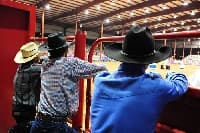
John B. Stetson designed the hat we now picture in 1865, on a hunting trip in the West, and the company that bears his name has been making versions of it ever since. Stetson is presently headquartered in Garland, Texas, where the hats are produced by Hatco, Inc., the same firm that produces Resistol and Charlie 1 Horse. Reporting from WWD in 2025 noted that Stetson's business has grown in the double digits every year since 2021, which surprises no one paying attention to the broader cultural moment.
A serviceable Stetson begins, at this writing, somewhere north of two hundred dollars, and the better felt hats run several times that. The premium one pays is largely for the felt itself, beaver and rabbit, hand-blocked, and for the finishing. A cheaper hat will not hold its crown after a single damp afternoon. I have watched this happen, more than once, at outdoor weddings in Charleston.
Three points are worth knowing before one buys:
- Fit. A Western hat should rest just above the ears, snug enough not to lift in a breeze. Most reputable hatters will steam and shape one to the head.
- Crown and brim. A taller crown reads more formal; a flatter brim, more traditional. The cattleman crease is the safest place to start.
- Color. Silverbelly and chocolate are the workhorses. Pure white is for occasions and showmen.
The Boot
If the hat is the silhouette, the boot is the architecture. A proper Western boot is built on a riding last, which is to say it is shaped to slip easily into a stirrup and stay there. That is why the toe tapers and the heel is angled. None of this is decorative.
The current marketplace is, as it has been for some years, dominated by three names: Lucchese, founded in 1883 and still made in Texas by hand; Tecovas, the direct-to-consumer house that has done more than anyone to popularize the boot among people who would not previously have owned one; and Ariat, which is widely worn on actual ranches. A pair of Tecovas can be had for under three hundred dollars; a pair of Luccheses begins well above six hundred and rises sharply from there. For most readers, a mid-range Tecovas or Ariat will more than suffice. For those who intend to wear the boot for the next twenty years and have them resoled twice, Lucchese is the considered choice. Rios of Mercedes and Chisos belong on the same shortlist.
A few notes on selection, drawn from a great deal of trial and error:
- Calfskin is the right starting place. Ostrich and lizard are handsome and reasonably durable. Alligator is for the genuinely committed.
- Buy a half size down from one's running shoe. The instep should grip; the heel will slip slightly at first and settle within a week.
- Plan to resole. A boot built well enough to be worth owning is built well enough to be repaired.
The Belt and Buckle
The trophy buckle, the broad oval one tends to associate with rodeo, came into common dress wear in the 1920s, when film took up the cowboy as a national figure. Before that, suspenders and plain belts were the rule. A working buckle today is meant to be seen but not announced; sterling silver with a modest engraved overlay is a sound choice. The leather should match the boot, more or less, though a careful contrast, cognac belt against chocolate boot, will read as deliberate rather than careless.
The Denim and the Shirt
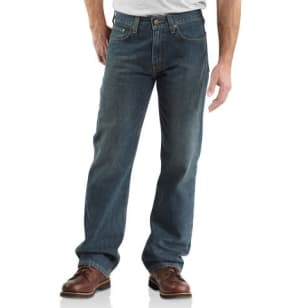
Wrangler's cowboy-cut jean, introduced in 1947, was designed in consultation with rodeo riders. The high back rise, the placement of the seams away from the inside of the knee, the boot-friendly leg, these are not styling decisions but functional ones, and they are the reason the cut has not meaningfully changed in three quarters of a century. Levi's 517 boot-cut is the other long-standing option. For a woman, the bootcut and the trouser cut both work; the slim cuts that have dominated the past decade do not sit cleanly over a boot.
The Western shirt, with its pointed yokes front and back, snap closures, and twin chest pockets, exists for the same practical reasons as the boot. The snaps release if the shirt catches on barbed wire or a saddle horn. The yokes were originally a structural reinforcement. Denim and chambray are the everyday weights; a pearl-snap in a fine cotton plaid will do for an evening.
What Holds It Together
One can assemble all of the above and still look as though one has shown up in costume. The difference, in my observation, comes down to restraint. A hat or a buckle, not both insisting at once. Boots that have been worn, not staged. A belt that fits the trousers it is paired with. The point of the Western wardrobe, like the point of any considered wardrobe, is that the pieces should look as though they belong to the person wearing them rather than the other way round.
For a reader past sixty who has been watching the culture turn back toward this vocabulary with some bemusement, I would offer one practical takeaway. The good pieces, a Stetson, a pair of well-made boots, a Wrangler or Levi's that fits, are not trend purchases. They were good in 1955 and they will be good in 2035. Buy one piece at a time, buy it well, and the rest, as the saying goes, will take care of itself.