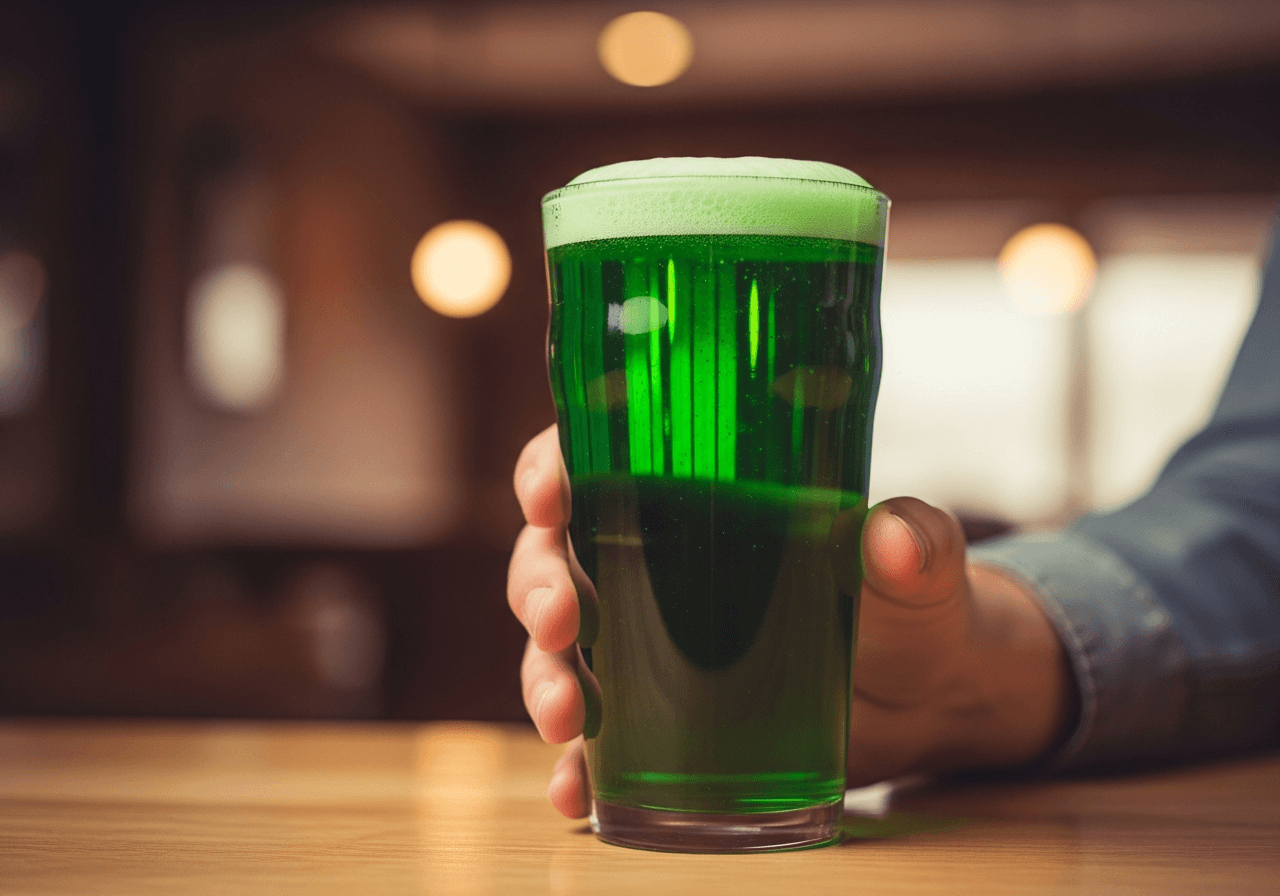
The first time somebody asked me to pour green beer at McGinty's Tap, it was 1989, my second St. Patrick's Day behind the stick, and a kid from the neighborhood slid a small bottle of McCormick food coloring across the bar like he was doing me a favor. I poured a Coors Light into a clean pint glass, put one drop of green in the bottom, drew the beer slow on top of it, and watched the color come up through the pour. The kid clapped. Maureen, who was doing the register that night, rolled her eyes. That's green beer. That's the whole trick.
Folks have been asking me about it again the last few Marches, mostly grandkids and a couple of the fellas from the senior center brewing class, so let me lay it out plain. Green beer is not a style. It's not an Irish tradition. It's a pale lager with a drop of dye in it, and the dye is doing the same job at home that it does at the bar. Once you understand that, the rest is just choosing your beer and not making a mess.
What it actually is
Green beer is a light-colored beer with green food coloring added. That's it. The color comes from the dye, not from anything that grows in Ireland. Lighter beers take the color best: American macro lagers, pilsners, pale ales on the lighter side, a wheat beer in a pinch. The paler the beer, the more vivid the green. You can dye a stout if you want to, but you'll only see green in the head when you pour it. The body stays black.
The trick most home cooks miss: the food coloring you want is usually blue, not green. Beer is yellow. Blue dye plus yellow beer gives you a cleaner, more vivid green than the bottle marked green, which can come out muddy. Try it once with each and you'll see what I mean.
The pour, step by step
This is one of those things people overthink. Here's the whole method:
- Put one drop of food coloring in the bottom of a clean, dry pint glass. One drop. You can always add a second.
- Pour the beer on top. Tilt the glass at first like a normal pour, then straighten it for the head.
- If the color is uneven, give the glass a gentle swirl. Do not stir it with a spoon, you'll kill the head.
For a pitcher, start with three drops and adjust. You're trying to get a clean grass-green or a clear emerald, not Nickelodeon slime. The goal is a beer that looks festive, not a beer that looks broken.
The natural-coloring detour
I've had a few of the basement-brewing fellas tell me they're skipping the dye and using spirulina or matcha or wheatgrass powder instead. I get it. It's a nicer story to tell at the table. A couple of honest notes from somebody who has tried each one:
- Spirulina. A blue-green algae powder. A pinch will turn a pale lager a deep murky green. It also tastes like pond, and you can see it floating. Strong personality. Goes in beer the way anchovies go in salad dressing, meaning a tiny amount or none.
- Matcha. A culinary-grade matcha is the cleanest of the natural options. It gives you a soft jade color and a faint grassy taste. Works best in a wheat beer where the cloudiness already hides everything.
- Wheatgrass powder. Earthier than matcha, dustier than spirulina. About a teaspoon to a pint. The color is real but the beer ends up tasting like a lawn.
None of these are wrong. They're just a different drink. If you want a beer that tastes like beer, the FDA-approved food coloring at the supermarket is doing the job most bars do, and it's safe. If you want to drink your vitamins, knock yourself out.
The 1914 origin nobody tells you
People assume green beer is Irish. It is not. It's American, and the first known batch was poured in 1914 by a Bronx coroner named Thomas Curtin at a club in the Bronx, and he made it green by dropping wash blue into a beer. Wash blue was a laundry whitener built around iron powder. You would not drink it today. Curtin was a doctor, the paper covered it as a curiosity, and the tradition took root the way most American bar traditions do, which is sideways and with somebody's questionable hand on the dropper.
By the time the dye industry caught up in the 1950s, green beer meant food coloring, not laundry product, and it spread the way any cheap, cheerful gimmick spreads. Bars liked it because it sold a Bud Light at a premium. Customers liked it because they got a photo and a story. Whether your grandfather drank it in a Kensington tap in 1962 or you saw it at a chain restaurant last March, it's the same drink with seventy years of momentum behind it.
Green Beer Day, the Ohio version
There's a separate thing that gets folded into this, which is Green Beer Day at Miami University in Oxford, Ohio. That one started in the early '80s, not the '50s, after the school's calendar shifted and put St. Patrick's Day inside spring break. The local bars wanted a Thursday to themselves, so they invented one. It's a college tradition, not a national holiday, and the only reason I'm mentioning it is that you'll see it pop up in articles every March and now you know what it is.
Should you bother in 2026
A fair question. The craft scene over the last few years has gotten a little sniffy about green beer, and I understand why. If you've spent good money on a Maine-brewed double IPA, you don't want some kid putting blue dye in it for a photo. Don't dye anything you'd pay more than three bucks a pint for. Save the green for cheap pale lagers, where it doesn't change anything important. Your Yuengling is not going to be insulted.
The other thing, if I'm being a square for a minute: a lot of us at 60-plus are on medications that don't love alcohol, and a green pitcher in front of you is the same five or six pints it would be uncolored. Drink less than you used to, drink slower than you used to, and eat something heavy with it. The Irish folks I know in Philly will tell you the same: the holiday in Ireland is a religious day with a parade attached, not a drinking contest.
One practical takeaway
If you're hosting on March 17, do this: buy one cheap, pale, clean lager by the six-pack. Get a small bottle of blue food coloring. Set out clean pint glasses, one drop in each, and let folks pour their own. Have water on the table. Put on a soda bread, a corned beef, a pot of cabbage with some butter. Don't make the beer the event. Make the food the event and let the beer be the gimmick that gets everybody laughing.
That's how we did it at the bar. That's how Maureen and I do it now, with Bruno underfoot hoping somebody drops a piece of brisket. Slainte.